 Golden Hour Now
Search a city or place name, or enter decimal coordinates as latitude, longitude.
Plan for
Select your location by searching for a city, place name, or coordinates above; click the Use my location button; or click anywhere on the map to choose a custom location. Once selected, simply scroll down below the map to view your golden and blue hour times and other light‑planning details.
At a glance
Tokyo Light
Today
Updated for the selected coordinates and local time. Move the pin for your exact shooting viewpoint.
Selected Location
Coordinates
—
Local Time
Current time: —
Daylight Planner
Plan your shoot around blue hour, golden hour, sunrise, sunset, and daylight.
Photography Weather
Forecast conditions around the selected evening golden-hour window.
Select a location and date to view the forecast.
7-Day Photography Forecast
Compare the next seven upcoming evening golden-hour opportunities at this location.
Select a location to compare the week ahead.
Forecast confidence generally improves as the shoot date approaches. Click any day to load its full daylight, sun-direction, weather, cloud, and quality details.
Tokyo photography guide
Photographing Golden Hour in Tokyo, Japan
Tokyo is a visibility, elevation and artificial-light-transition city. The strongest plan often depends on whether Mount Fuji is visible, whether haze obscures the horizon, which observation deck is accessible, and how natural light transitions into blue hour and dense nighttime illumination.
The default pin is SHIBUYA SKY / Shibuya Crossing. Move the planner to the exact tower, park, waterfront or river viewpoint before relying on Photography Weather, visibility, cloud layers or sun direction.
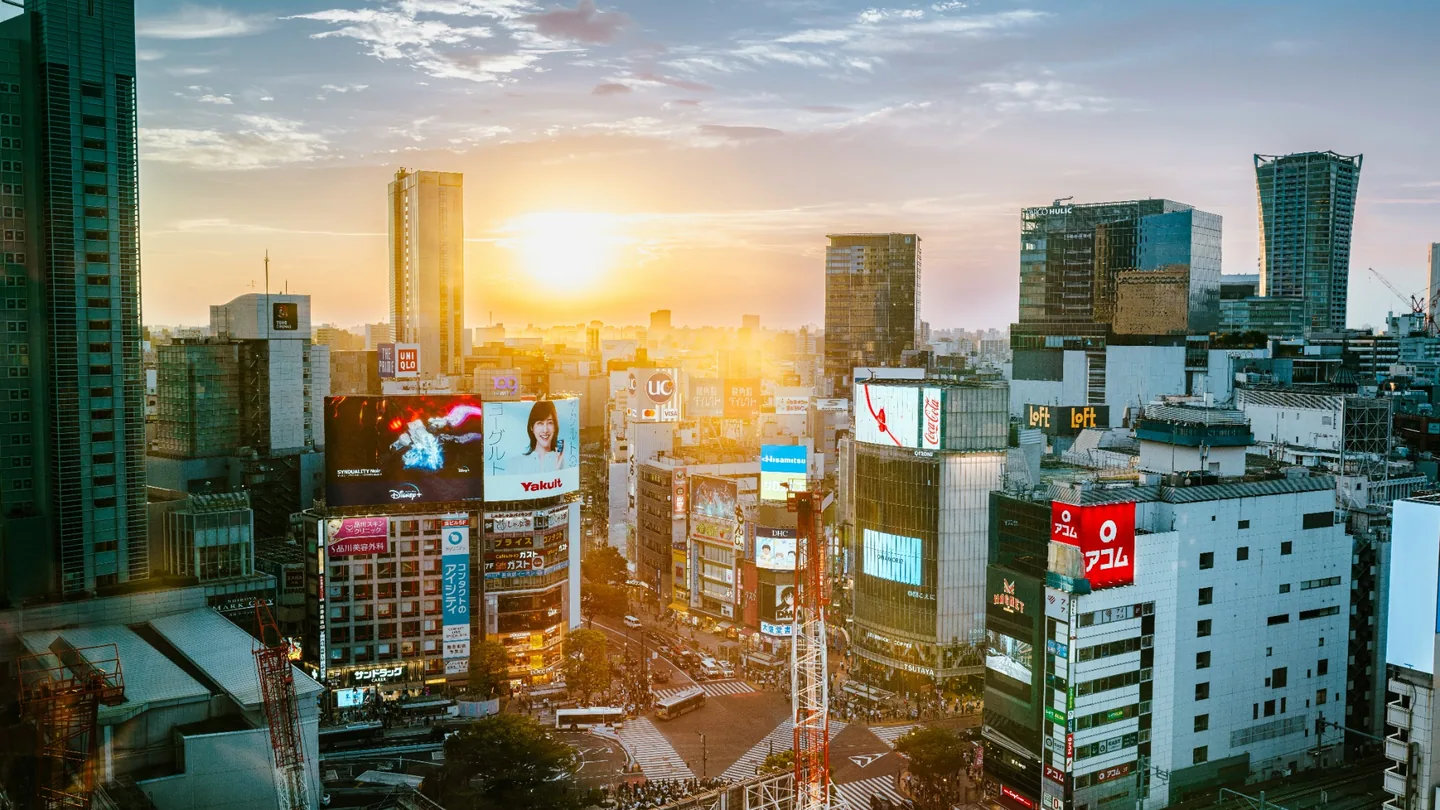
Warm sunset light spreads across the Shibuya skyline as the city's signs and streets begin transitioning toward their nighttime glow.
Photo: A Y / UnsplashWhat Photographers Should Know
Light in practice
Tokyo Photography Examples
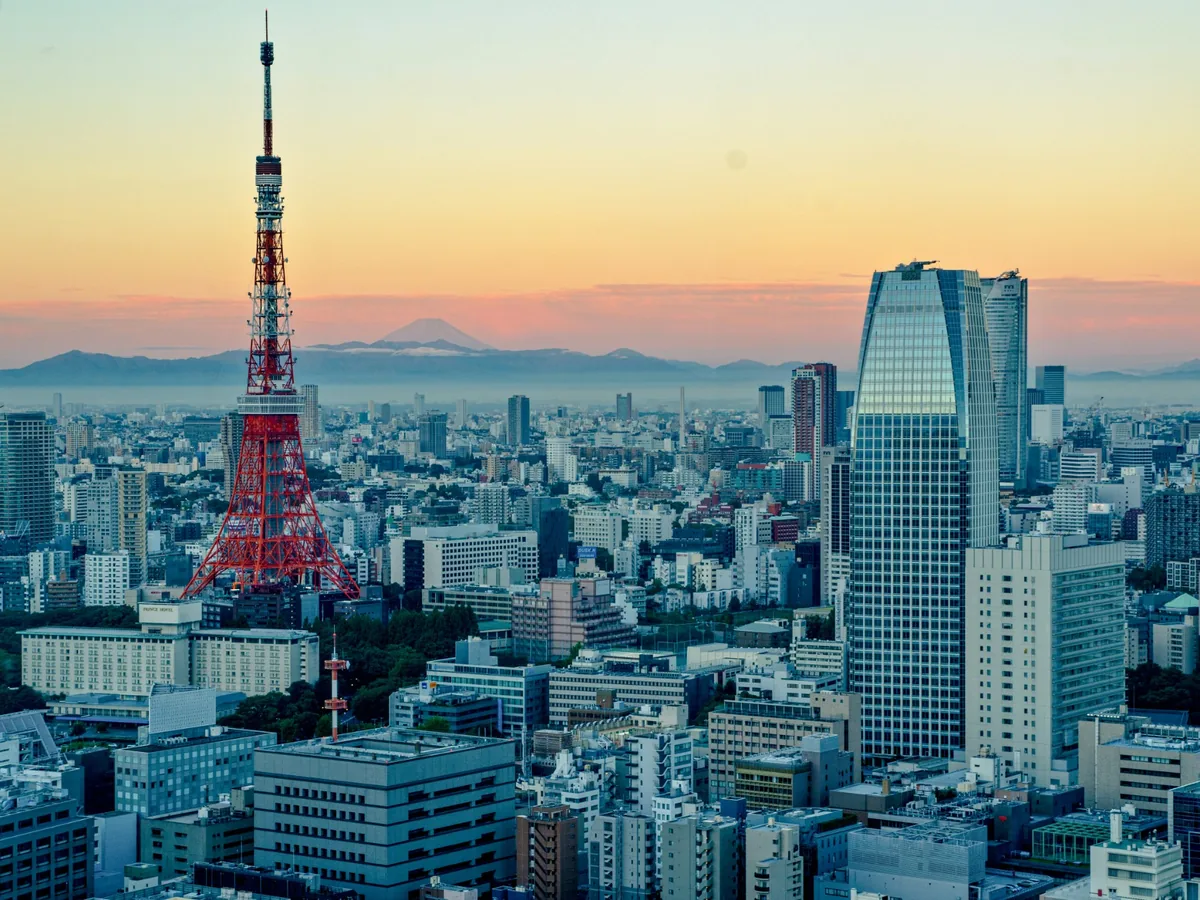
Tokyo Tower rises above the dense cityscape as warm horizon light gives way to cooler evening tones and distant mountain layers.
Photo: Clement Souchet / Unsplash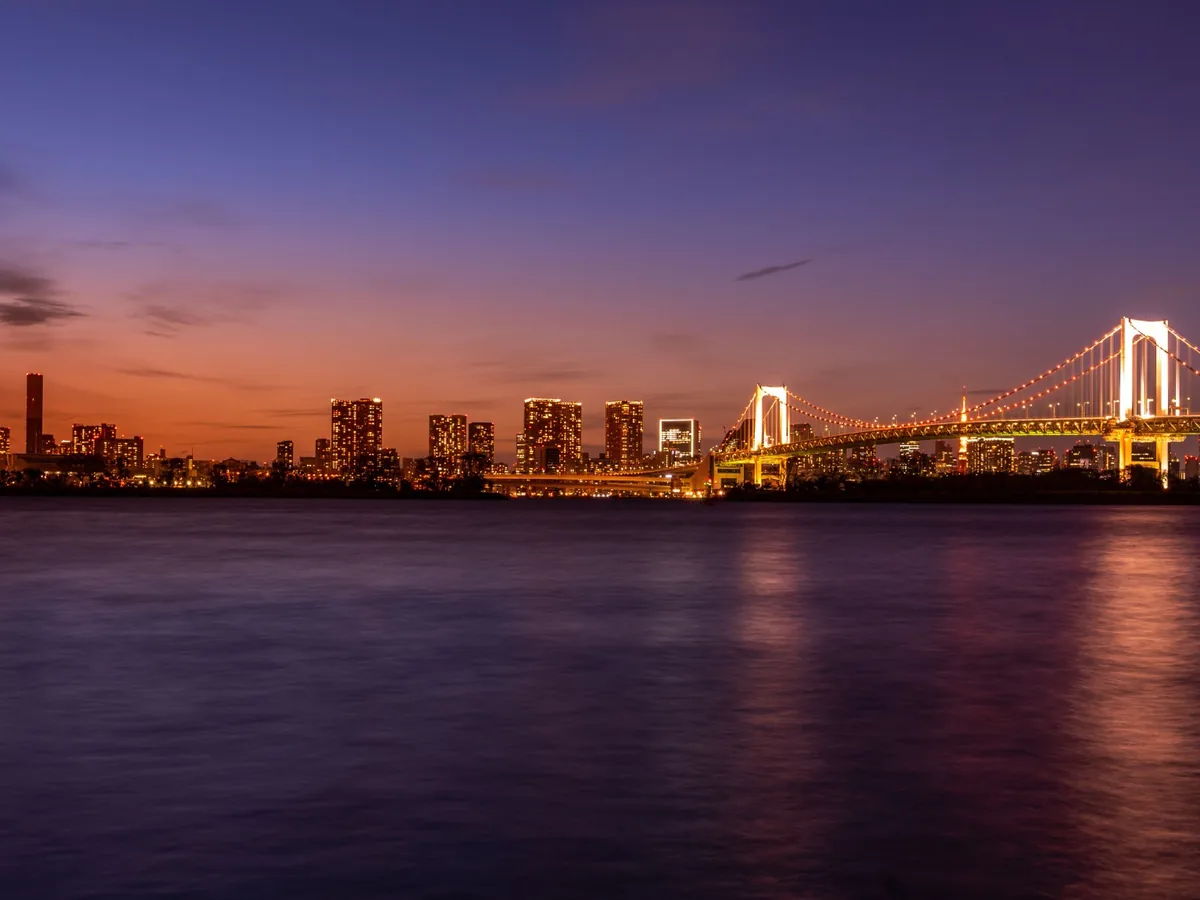
As sunset fades over Tokyo Bay, Rainbow Bridge and the waterfront skyline illuminate while their lights stretch across the water.
Photo: Pierre Blaché / PexelsGolden Hour Photography Locations in Tokyo
SHIBUYA SKY / Shibuya Crossing
Skyline + neon transition- Best for
- Shibuya Crossing, western skyline, Fuji visibility, sunset and city lights
- Access / conditions
- Timed admission; sunset slots are popular.
Tokyo Metropolitan Government Building
Free skyline + Fuji- Best for
- Shinjuku skyline, Mount Fuji, city lights and visibility
- Access / conditions
- Free observation decks; verify current operating hours.
Shiba Park / Tokyo Tower
Landmark + foreground- Best for
- Tokyo Tower, park framing, warm light and illumination
- Access / conditions
- Flexible ground-level compositions.
Odaiba Marine Park / Rainbow Bridge
Bay sunset + reflections- Best for
- Rainbow Bridge, Tokyo Bay, skyline reflections and blue hour
- Access / conditions
- Wind and water texture affect reflections.
Sumida River / Asakusa
Skytree + traditional Tokyo- Best for
- TOKYO SKYTREE, Sumida River, bridges, blossoms and twilight
- Access / conditions
- Access varies by exact riverwalk/park location.
Signature Tokyo variable
Will Mount Fuji Be Visible From Tokyo?
Clear, dry air offers the best chance of a crisp Fuji silhouette. Humidity and haze can hide the mountain even with little overhead cloud; low western cloud can block it entirely. Cooler months generally offer stronger long-distance visibility. Treat visibility and cloud layers as planning signals, not guarantees.
Natural → artificial light
Tokyo's Three-Stage Light Transition
Golden hour favors Tokyo Tower, skyline edges and possible Fuji silhouettes. Blue hour favors Shibuya, Rainbow Bridge, Skytree and waterfront reflections. Night shifts attention toward Shibuya, Shinjuku, Ginza and other illuminated streets. For Tokyo city photography, sunset is usually the beginning of the most visually diverse part of the session.
Access planning
Observation Deck Access Comes Before the Forecast
SHIBUYA SKY and other controlled observation decks use operating hours and timed admission. Sunset entries can be especially popular. Secure the desired access window first, then re-check current operating conditions and weather.
Indoor viewpoints
Observation Deck Glass & Reflections
Indoor decks can introduce interior-light reflections, double images, tint and glare. Place the lens close to glass where permitted, avoid flash, reduce nearby screen brightness and shoot more perpendicular to the glass. Open-air viewpoints reduce glass problems but introduce wind and weather exposure.
Alignment planning
Mount Fuji + Sunset Direction
From western Tokyo viewpoints, Mount Fuji lies broadly west-southwest while sunset azimuth changes through the year. Use Sun Direction to compare the setting sun with Fuji's direction from your exact viewpoint. GoldenHourNow does not calculate topographic Diamond Fuji alignments.
Waterfront light
Photographing Tokyo Bay at Sunset & Blue Hour
Odaiba combines open western sky, Rainbow Bridge and broad water foregrounds. Reflection quality depends on wind, boat wakes, tide, cloud color and illumination.
Wet-city photography
Rain Can Improve Tokyo Night Photography
Wet streets amplify signage, crossing signals, storefronts, taxis and street lamps. A weak conventional golden-hour forecast can still produce an outstanding Tokyo evening, particularly in Shibuya, Shinjuku, Ginza, Akihabara and Kabukicho.
Spring specialty
Cherry Blossom Photography
Tokyo's main sakura period commonly occurs around late March into early April, but bloom timing varies each year. Sumida Park is especially useful because blossoms can be composed with TOKYO SKYTREE and the river.
Crowd strategy
Shibuya: Clean Architecture or Full Energy?
Sunset and night provide the strongest signs, traffic and crowd energy around Shibuya Crossing, while early morning produces much cleaner architecture and street geometry. Decide whether people are part of the intended composition before choosing the time.
Landmark choice
Tokyo Tower vs. TOKYO SKYTREE
Tokyo Tower favors classic city identity, closer urban foregrounds and Shiba Park compositions. TOKYO SKYTREE favors extreme elevation, eastern Tokyo, Sumida River context and expansive long-distance views.
Aircraft
Drone Photography
Do not assume drone photography is legal in central Tokyo. Japan regulates unmanned aircraft and restricts operations in densely inhabited and other controlled airspace. Verify current MLIT/DIPS requirements before flight; GoldenHourNow does not determine drone legality.
Street etiquette
Street Photography in Dense Public Spaces
Keep crossings, station platforms and pedestrian routes clear. Avoid intrusive close-range photography, respect posted restrictions, avoid disruptive flash, and keep tripods out of high-flow pedestrian areas.
Sunrise vs. Sunset in Tokyo
Sunrise
Early morning provides cleaner streets, lighter pedestrian traffic and crisp architectural scenes—useful when geometry matters more than Tokyo's full illuminated energy.
Sunset → Night
Evening provides the complete natural-to-artificial transition, stronger observation-deck atmosphere, waterfront illumination and dense city light.
Seasonal Photography Planning
Tokyo Golden Hour Workflow
- Choose skyline, landmark, waterfront or street photography.
- If using a controlled observation deck, secure the desired entry window.
- Select the exact viewpoint.
- Check sun azimuth and western horizon direction.
- Review visibility and Mount Fuji potential.
- Review cloud layers.
- Check precipitation, wind and temperature.
- Prepare for glass reflections if shooting indoors.
- Allow rail and walking time.
- Arrive before golden hour.
- Continue through blue hour and night when appropriate.
- Respect crowd flow and site-specific rules.
Nearby Photography Destinations
Future Japan coverage can include Mount Fuji / Lake Kawaguchi, Yokohama, Kamakura, Hakone, Kyoto and Osaka.