 Golden Hour Now
Search a city or place name, or enter decimal coordinates as latitude, longitude.
Plan for
Select your location by searching for a city, place name, or coordinates above; click the Use my location button; or click anywhere on the map to choose a custom location. Once selected, simply scroll down below the map to view your golden and blue hour times and other light‑planning details.
At a glance
Banff National Park Light
Today
Updated for the selected coordinates and local time. Move the pin for your exact shooting viewpoint.
Selected Location
Coordinates
—
Local Time
Current time: —
Daylight Planner
Plan your shoot around blue hour, golden hour, sunrise, sunset, and daylight.
Photography Weather
Forecast conditions around the selected evening golden-hour window.
Select a location and date to view the forecast.
7-Day Photography Forecast
Compare the next seven upcoming evening golden-hour opportunities at this location.
Select a location to compare the week ahead.
Forecast confidence generally improves as the shoot date approaches. Click any day to load its full daylight, sun-direction, weather, cloud, and quality details.
Banff National Park photography guide
Photographing Golden Hour in Banff National Park, Canada
Banff is a mountain-light, reflection and rapidly changing weather destination. The astronomical sun window is only part of the story: surrounding peaks create topographic shadow, alpine clouds can hide or reveal summits within minutes, and wind determines whether glacial lakes behave like mirrors.
The default pin is Lake Louise Lakeshore. Move the planner to the exact lake, roadside pullout or mountain viewpoint before relying on Photography Weather, cloud layers, visibility, wind or sun direction.
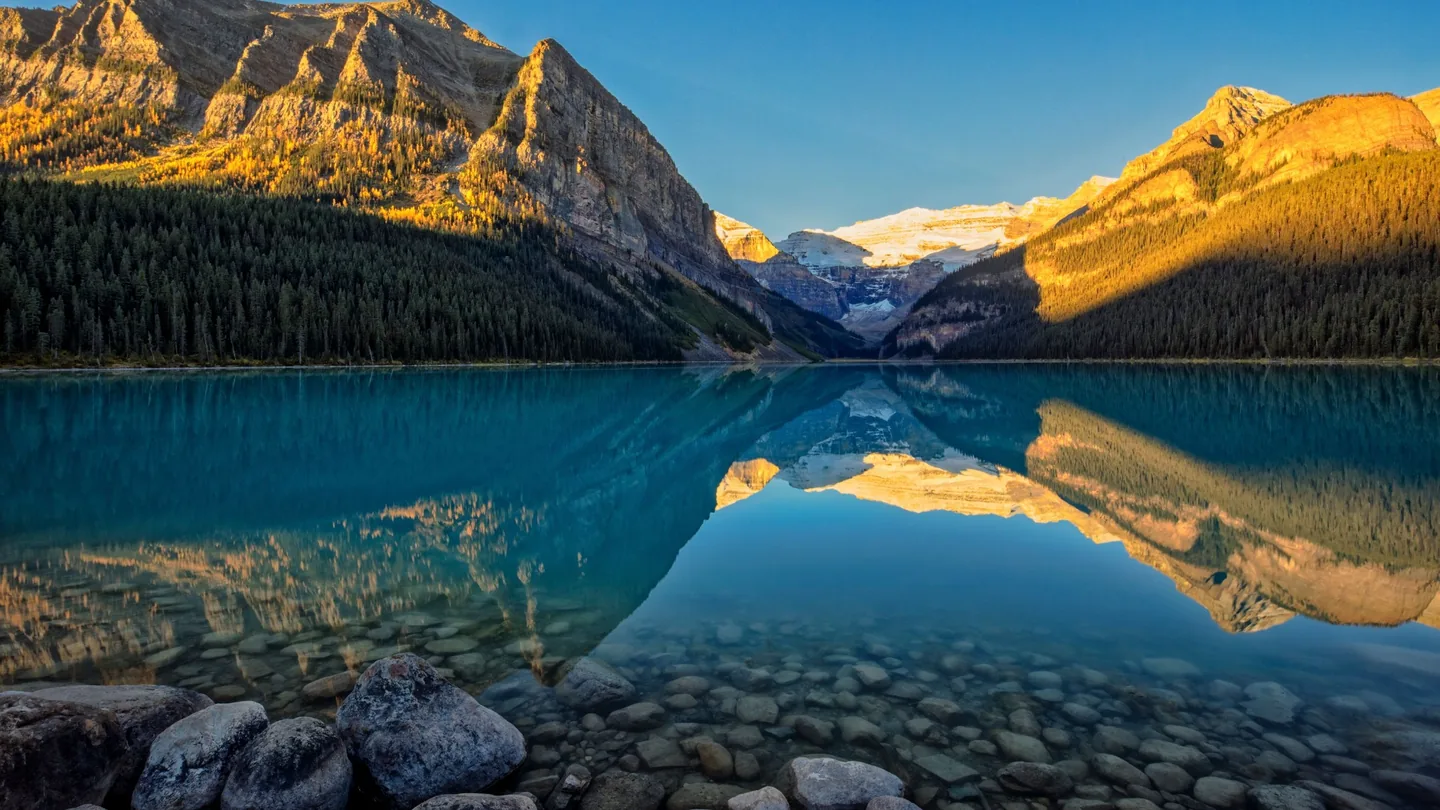
Low-angle sunlight reaches the surrounding peaks while calm Lake Louise mirrors the mountains and Victoria Glacier across its turquoise water.
Photo: Carsten Ruthemann / PexelsWhat Photographers Should Know
Light in practice
Banff National Park Photography Examples
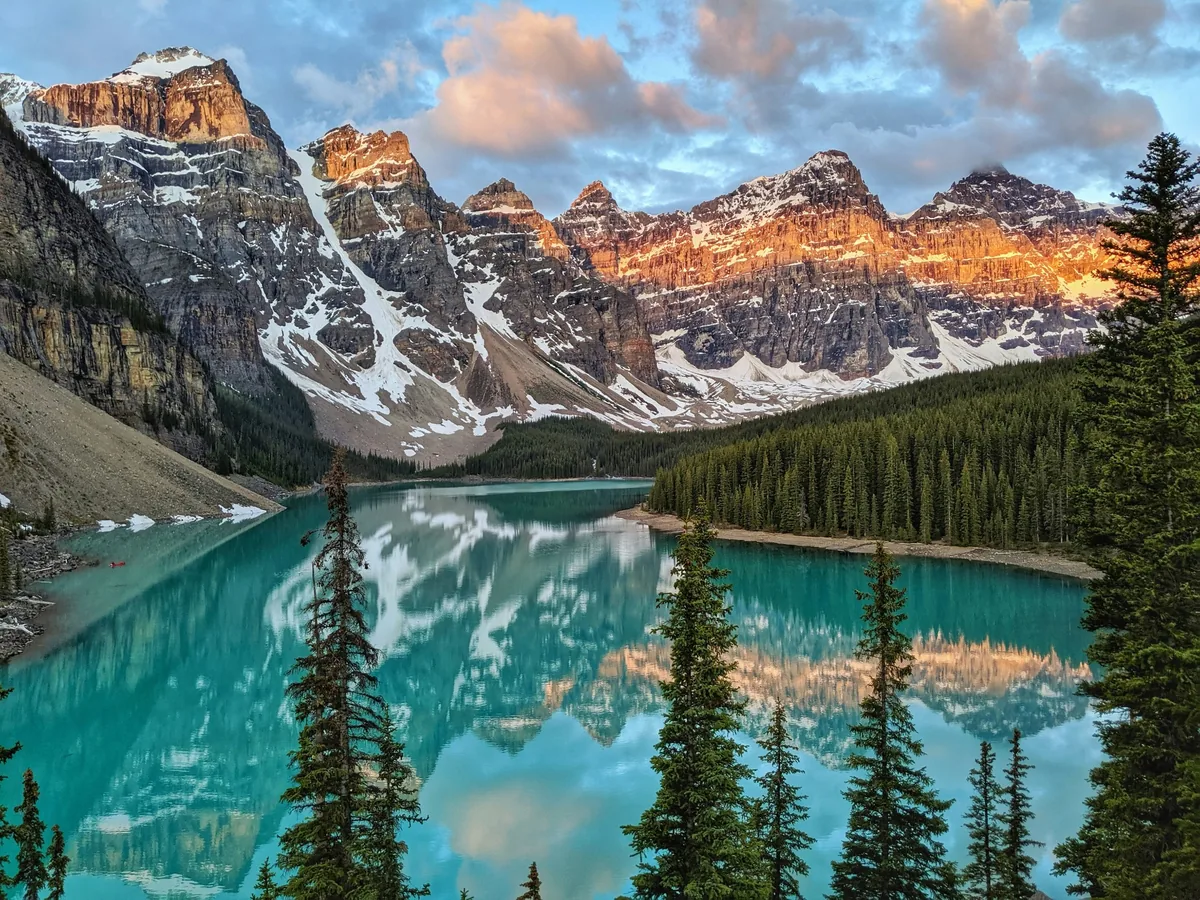
Warm early light reaches the upper peaks above Moraine Lake while clouds, snow and turquoise water create layered reflections below.
Photo: Jacky Huang / Unsplash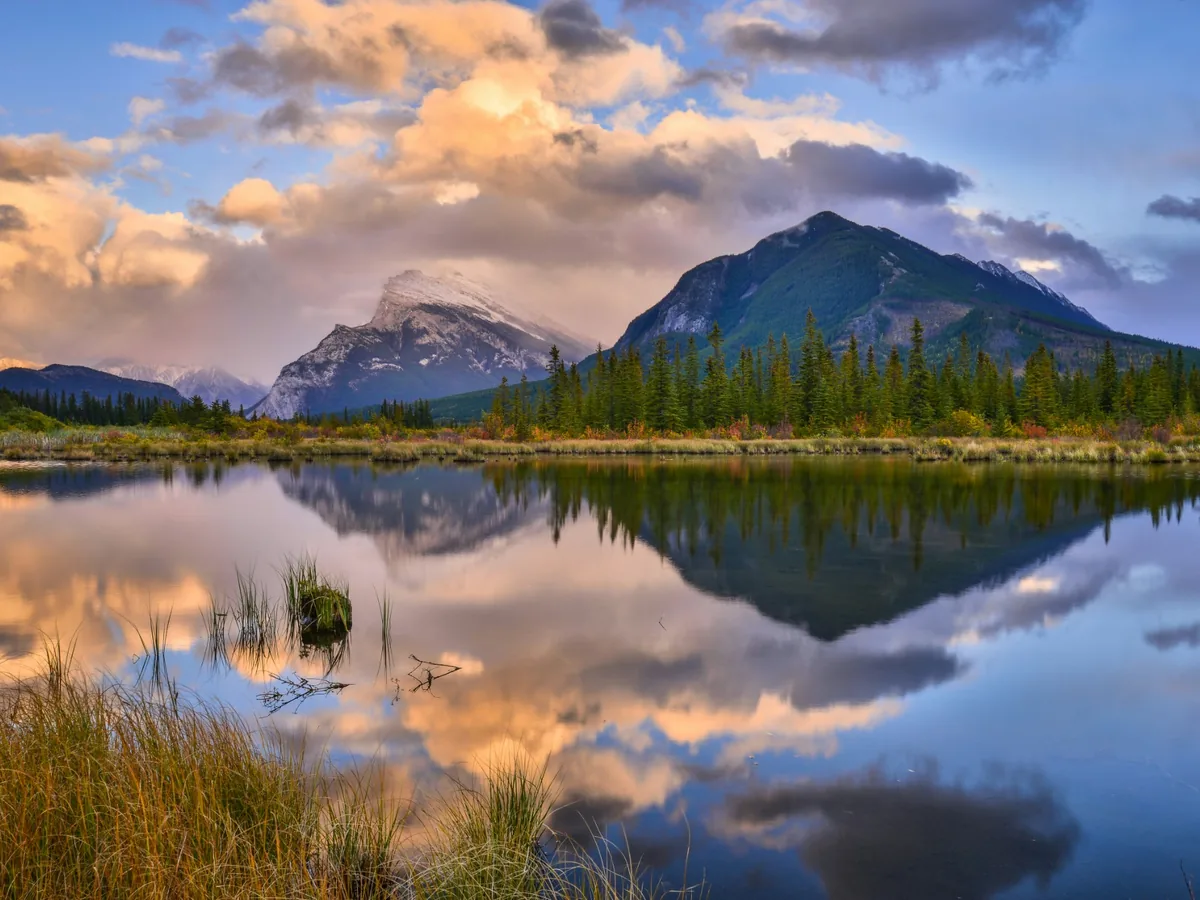
Early light catches the clouds above Mount Rundle while calm water reflects the mountains, forest and warm sky across the wetlands.
Photo: Nunzio Guerrera / UnsplashGolden Hour Photography Locations in Banff National Park
Lake Louise Lakeshore
Lake + mountain sunrise- Best for
- Victoria Glacier, turquoise water, reflections, alpenglow and changing valley shadow
- Access / conditions
- Extremely popular; seasonal parking/transit controls apply.
Moraine Lake Rockpile
Ten Peaks + reflections- Best for
- Valley of the Ten Peaks, sunrise color, lake reflections and dramatic mountain light
- Access / conditions
- Personal vehicles are restricted from Moraine Lake Road; plan current Parks Canada transit/shuttle access.
Vermilion Lakes
Mount Rundle + wetlands- Best for
- Mount Rundle reflections, sunrise/sunset color, mist and accessible foregrounds
- Access / conditions
- Low-elevation wetland viewpoint; wind strongly affects reflection quality.
Bow Lake / Icefields Parkway
Glacial lake + peaks- Best for
- Bow Glacier, Crowfoot Mountain, reflections, alpine weather and broad landscapes
- Access / conditions
- Highway/weather conditions can change quickly; check current road status.
Lake Minnewanka
Open water + mountains- Best for
- Mountain layers, shoreline foregrounds, sunrise, sunset and storm light
- Access / conditions
- Exposed to wind; water texture can change quickly.
Mountain light
Alpenglow Is Not the Same as Golden Hour
Banff's highest peaks can receive warm pink or orange light before sunrise or after sunset while valleys and lakes are already in shadow. The strongest mountain color may therefore occur outside the conventional golden-hour interval. Use twilight timing, sun direction and cloud conditions together.
Topographic shadow
Mountains Can Hide the Sun Early
Published sunrise and sunset times describe the astronomical horizon, not the surrounding peaks. In deep valleys the direct sun can disappear behind terrain well before official sunset—or arrive well after sunrise. Exact viewpoint and mountain geometry matter.
Reflections
When Will the Lakes Reflect the Mountains?
Calm water is often most likely around quieter morning periods, but conditions vary. Wind speed and gusts directly affect whether a lake produces a mirror reflection, textured shimmer or broken highlights. Check wind alongside cloud cover.
Atmosphere
Wildfire Smoke & Visibility
Wildfire smoke can reduce visibility, flatten distant mountain contrast and change sunrise/sunset color. Moderate smoke may create warm atmospheric layers, while heavy smoke can obscure peaks and create unhealthy conditions. Photography quality should never override current air-quality and closure guidance.
Fast weather
Mountain Weather Changes Quickly
Cloud, wind, precipitation and temperature can change rapidly with elevation and terrain. A forecast for Banff townsite may not represent Lake Louise, Moraine Lake or the Icefields Parkway. Move the planner to the exact viewpoint and re-check conditions close to the session.
Cloud interpretation
Cloud Layers & Mountain Color
Low cloud can hide summits completely. Broken mid-level cloud can create shafts of light and dramatic mountain layers. High cloud can catch pre-sunrise or post-sunset color. Clear sky provides reliable directional light but may produce less dramatic sky.
Seasonal access
Roads, Shuttles & Viewpoint Access
A good light forecast does not guarantee physical access. Moraine Lake uses controlled transit access, while Icefields Parkway and alpine areas can face snow, closures or hazardous conditions. Verify current Parks Canada access before committing to a shoot.
Winter planning
Snow Changes Exposure and Access
Snow reflects substantial light and can clip highlights while shaded valleys remain dark. Reduce exposure when necessary, watch highlight warnings and prepare for icy surfaces, cold batteries and limited access. Winter tires and road restrictions may apply.
Wildlife
Wildlife Comes Before the Photograph
Banff is active wildlife habitat. Never approach, feed or crowd animals for a photograph. Use appropriate distance and long lenses, obey closures and instructions, and keep escape routes clear. GoldenHourNow does not replace Parks Canada wildlife-safety guidance.
Night transition
Blue Hour & Astrophotography
Mountain silhouettes become especially strong during blue hour, and darker areas of the park can support night-sky photography. Weather, moonlight, aurora potential, road access and wildlife safety all require separate planning beyond the golden-hour forecast.
Permissions
Commercial Photography & Parks Canada
Ordinary visitor photography and organized commercial production are different activities. Commercial filming, large crews, reserved areas or activity that affects visitors/resources may require Parks Canada authorization. Verify current rules for the exact production.
Aircraft
Drone Photography Is Prohibited
Recreational drone use is prohibited at Parks Canada places, including Banff National Park, and unauthorized use can result in enforcement. Do not plan a drone launch inside the park unless operating under specific Parks Canada authorization.
Sunrise vs. Sunset in Banff
Sunrise
Often strongest for calm water, reduced crowds and first light on selected mountain faces. Valley shadow means the official sunrise time may precede direct light at the lake by a substantial margin.
Sunset & Twilight
Evening can produce warm peaks, dramatic western cloud and post-sunset alpenglow. Stay through twilight rather than treating official sunset as the end of the session.
Seasonal Photography Planning
Banff Photography Workflow
- Choose lake reflections, mountain alpenglow, landscape, wildlife or twilight photography.
- Select the exact lake or viewpoint.
- Check sunrise/sunset azimuth and consider terrain blocking.
- Review low, mid and high cloud layers.
- Check visibility, smoke and air-quality conditions.
- Check wind and gusts for reflection quality.
- Review precipitation and temperature at the actual elevation.
- Verify Parks Canada road, shuttle, trail and closure information.
- Prepare for wildlife encounters and maintain required distance.
- Arrive before the expected light window.
- Continue through twilight for possible alpenglow and blue hour.
- Do not launch a drone inside Banff National Park without specific authorization.
Nearby Photography Destinations
Future Canadian Rockies coverage can include Jasper National Park, Yoho National Park, Kananaskis Country, Canmore, the Icefields Parkway and Waterton Lakes. Until then, use the worldwide planner for exact locations.