 Golden Hour Now
Search a city or place name, or enter decimal coordinates as latitude, longitude.
Plan for
Select your location by searching for a city, place name, or coordinates above; click the Use my location button; or click anywhere on the map to choose a custom location. Once selected, simply scroll down below the map to view your golden and blue hour times and other light‑planning details.
At a glance
Haleakalā Summit Light
Today
Updated for the selected coordinates and local time. Move the pin for your exact shooting viewpoint.
Selected Location
Coordinates
—
Local Time
Current time: —
Daylight Planner
Plan your shoot around blue hour, golden hour, sunrise, sunset, and daylight.
Photography Weather
Forecast conditions around the selected evening golden-hour window.
Select a location and date to view the forecast.
7-Day Photography Forecast
Compare the next seven upcoming evening golden-hour opportunities at this location.
Select a location to compare the week ahead.
Forecast confidence generally improves as the shoot date approaches. Click any day to load its full daylight, sun-direction, weather, cloud, and quality details.
Haleakalā Summit photography guide
Photographing Golden Hour at Haleakalā Summit, Maui
Haleakalā is a high-elevation volcanic photography destination where access, cloud inversion, wind, temperature and altitude matter as much as sunrise time. Conditions at a Maui beach are not a reliable proxy for conditions above 10,000 feet.
The default pin is Puʻu ʻUlaʻula / Red Hill at 10,023 ft. Move the planner to the exact overlook before relying on Photography Weather, cloud layers or Quality Score.
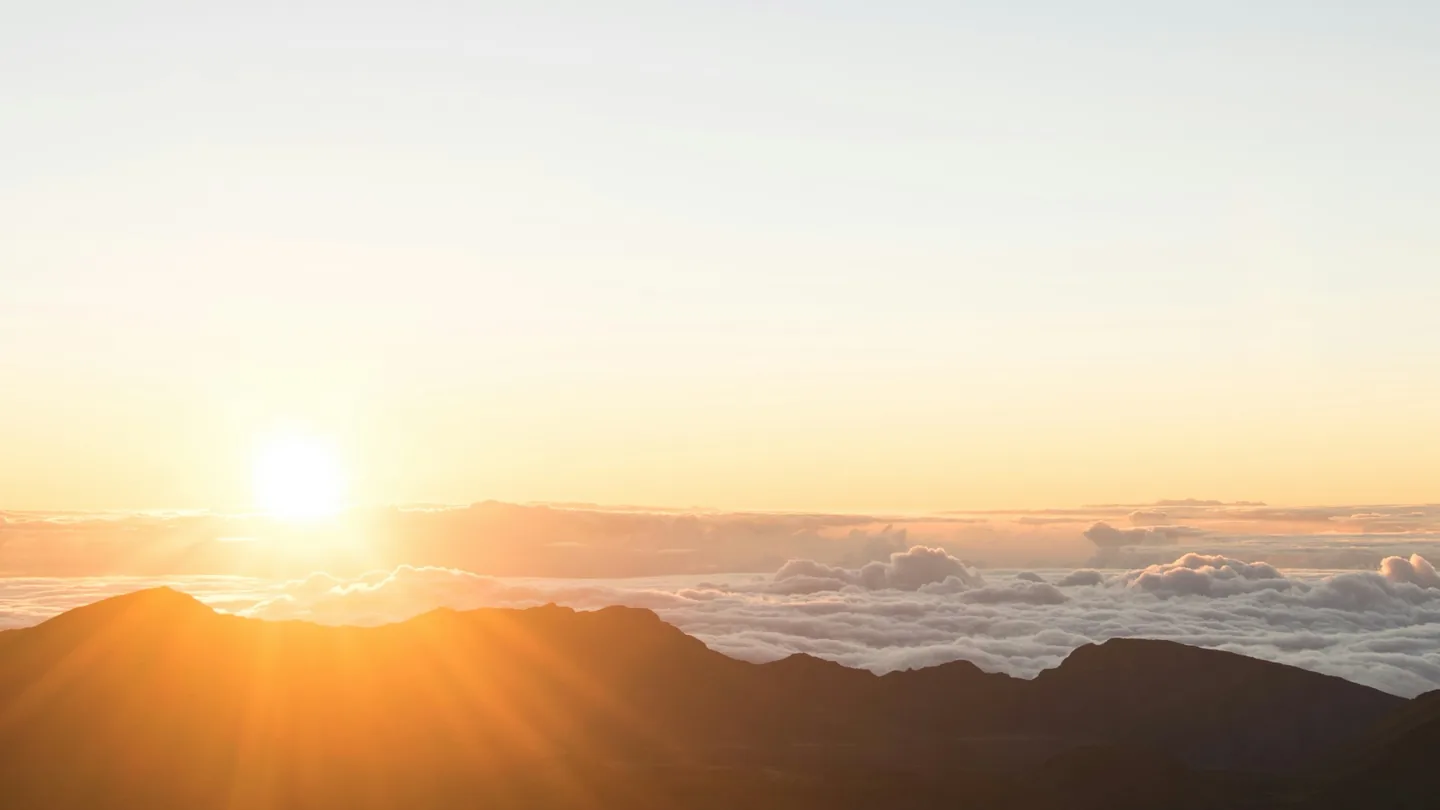
When the summit rises above an inversion layer, first light can illuminate volcanic ridges while a sea of clouds remains below.
Photo: Alice Donovan Rouse / UnsplashWhat Photographers Should Know
Light in practice
Haleakalā Photography Examples
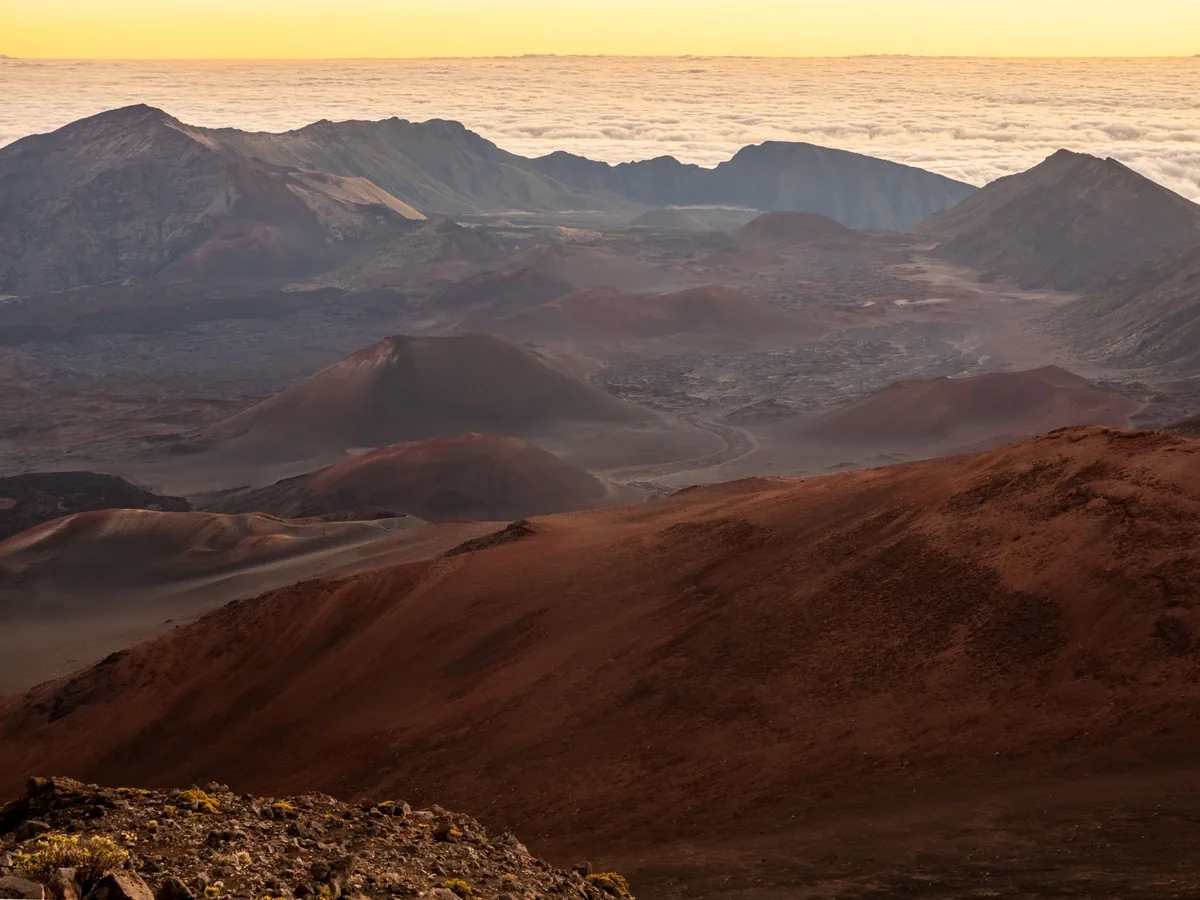
Cinder cones, ridges and crater walls receive light at different angles, creating layers of color, texture and shadow across the volcanic landscape.
Photo: James Wheeler / Pexels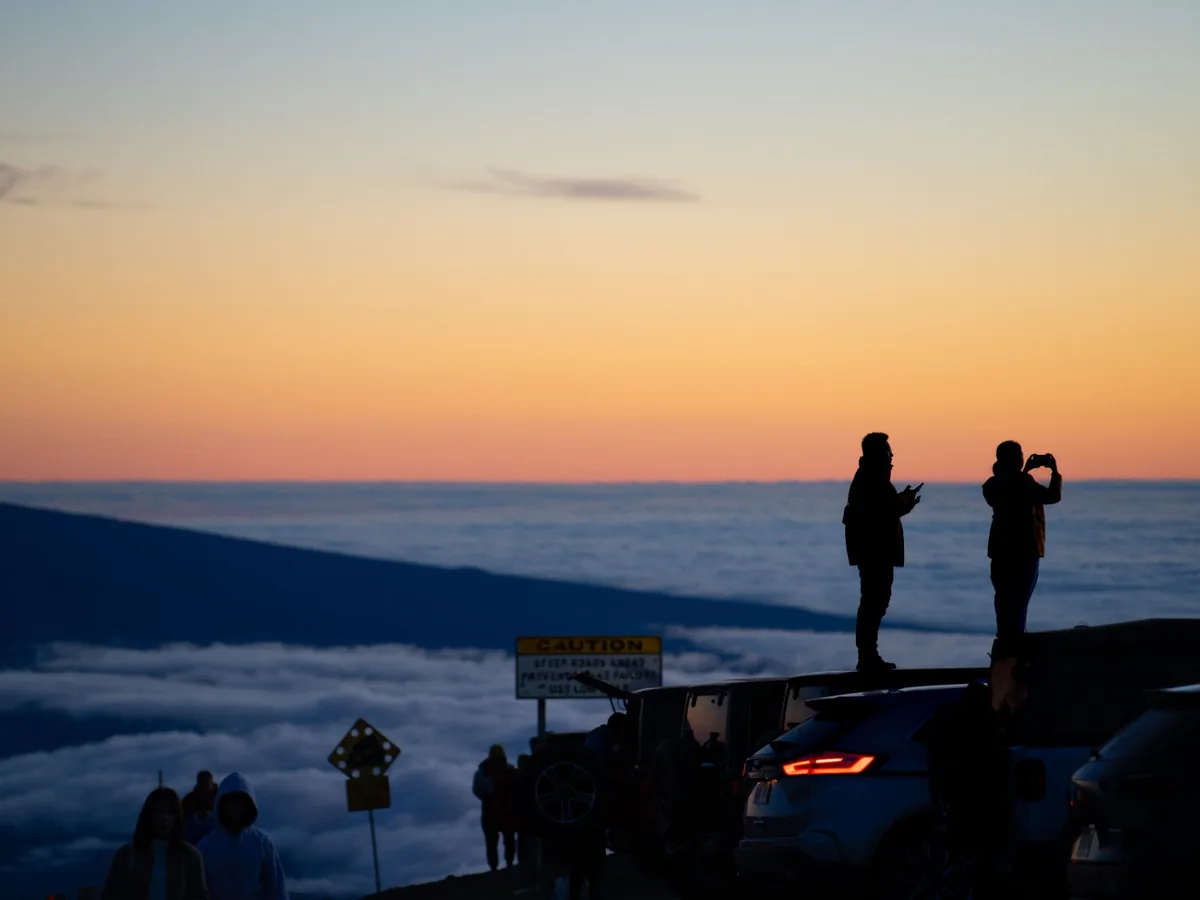
After direct sunlight fades, the high-elevation horizon can retain warm color while the summit and cloud deck transition toward cooler twilight.
Photo: Tim & Martin Klement / PexelsGolden Hour Photography Locations at Haleakalā
Puʻu ʻUlaʻula / Red Hill Summit
Highest summit viewpoint- Best for
- Sunrise above clouds, volcanic terrain, twilight gradients
- Access / conditions
- 10,023-ft summit; sunrise reservation required for 3–7 a.m. vehicle entry.
Haleakalā Visitor Center Overlook
Crater + sunrise- Best for
- Crater layers, cinder cones, cloud deck and first light
- Access / conditions
- Approx. 9,740 ft; parking can fill and facility status can change.
Kalahaku Overlook
Crater layers- Best for
- Cinder cones, volcanic texture and directional light
- Access / conditions
- Approx. 9,324 ft; conditions can differ from the summit above.
Leleiwi Overlook
Cloud-edge atmosphere- Best for
- Cloud inversion, crater atmosphere, fog edges and sunrise
- Access / conditions
- Approx. 8,840 ft; short walk from parking area, so allow time in darkness.
Hosmer Grove / Lower Summit District
Forest-to-summit contrast- Best for
- Fog, forest atmosphere and lower-elevation clouds
- Access / conditions
- Lower Summit District; do not use lower-elevation weather as a summit proxy.
Access comes first
Sunrise Reservations: Plan Before the Forecast
Vehicle entry to the Summit District between 3:00 a.m. and 7:00 a.m. requires a sunrise reservation in addition to park admission. Reservations are limited and do not guarantee a particular parking lot or overlook.
Signature summit variable
Will You Be Above the Clouds?
Above a cloud deck: spectacular cloud-sea illumination is possible. Inside summit cloud: visibility can collapse. Clear summit and lower atmosphere: distant visibility may improve but with less dramatic cloud structure.
Cloud Layer Analysis is a planning signal, not a guarantee. Confirm with current summit conditions and the NPS crater webcam.
High-elevation weather
Maui Beach Weather ≠ Haleakalā Summit Weather
Summit conditions can be roughly 20°F colder than sea level and can include freezing temperatures, strong wind, mist and rapidly changing visibility. Severe weather can close the Summit District.
Sunrise vs. Sunset at Haleakalā
Sunrise
Pre-dawn color, cloud-sea illumination and first directional light across volcanic terrain. Advance vehicle access planning, darkness, cold and parking limits are major considerations.
Sunset
No special sunrise vehicle reservation is required. Sunset offers warm volcanic light, easier logistics and a direct transition into blue hour and stargazing.
After sunset
Blue Hour & Stargazing
GoldenHourNow plans the solar-light transition through blue hour. Dedicated astronomy tools are still needed for Milky Way, moon and deep-sky positioning.
Altitude + remoteness
10,000-Foot Summit Safety
Move slowly, avoid unnecessary exertion, hydrate, and descend if you feel unwell. Bring warm layers, water, food, sturdy footwear and sun protection. Fill your fuel tank before entering and verify EV range; there are no EV charging stations inside the park.
Cultural respect
Photograph Respectfully at a Sacred Landscape
Haleakalā is sacred to Native Hawaiians. Keep noise low, remain in established visitor areas, do not move rocks or disturb cultural/natural features, and never interrupt traditional practices for a photograph.
Seasonal Photography Planning
Permits + aircraft
Photography Permits & Drone Rules
Current NPS guidance generally allows small, low-impact photography groups in public areas without a permit when no exclusive use or resource impact is involved. Larger or higher-impact productions can require authorization.
Drones: Launching, landing or operating unmanned aircraft within Haleakalā National Park is prohibited unless specifically authorized by the superintendent.
Haleakalā Summit Photography Workflow
- Choose sunrise or sunset.
- If sunrise, secure the 3–7 a.m. vehicle reservation first.
- Select the exact viewpoint.
- Check NPS conditions and closures.
- Check the NWS summit forecast.
- Review cloud layers.
- Check the crater webcam.
- Review wind and temperature.
- Pack warm clothing, water and food.
- Fill fuel or verify EV range.
- Allow substantial uphill drive time.
- Do not assume a specific parking lot is available.
- Respect cultural activity and resources.
- Stay through blue hour if conditions are favorable.
Nearby Photography Destinations
Future Maui coverage can include the Road to Hāna, ʻĪao Valley, Waiʻānapanapa, Kīhei/Wailea and west Maui coastal viewpoints.