 Golden Hour Now
Search a city or place name, or enter decimal coordinates as latitude, longitude.
Plan for
Select your location by searching for a city, place name, or coordinates above; click the Use my location button; or click anywhere on the map to choose a custom location. Once selected, simply scroll down below the map to view your golden and blue hour times and other light‑planning details.
At a glance
Paris Light
Today
Updated for the selected coordinates and local time. Move the pin for your exact shooting viewpoint.
Selected Location
Coordinates
—
Local Time
Current time: —
Daylight Planner
Plan your shoot around blue hour, golden hour, sunrise, sunset, and daylight.
Photography Weather
Forecast conditions around the selected evening golden-hour window.
Select a location and date to view the forecast.
7-Day Photography Forecast
Compare the next seven upcoming evening golden-hour opportunities at this location.
Select a location to compare the week ahead.
Forecast confidence generally improves as the shoot date approaches. Click any day to load its full daylight, sun-direction, weather, cloud, and quality details.
Paris photography guide
Photographing Golden Hour in Paris, France
Paris is a sun-direction and blue-hour city. Monument orientation, narrow streets, bridges, the Seine and long seasonal twilight can matter as much as the golden-hour clock itself. Small changes in solar azimuth can determine whether a façade receives warm light, becomes a silhouette or stays shaded.
The default pin is the Trocadéro / Eiffel Tower axis. Move it to the exact bridge, courtyard, riverbank or Montmartre viewpoint before relying on Photography Weather, cloud layers or sun direction.
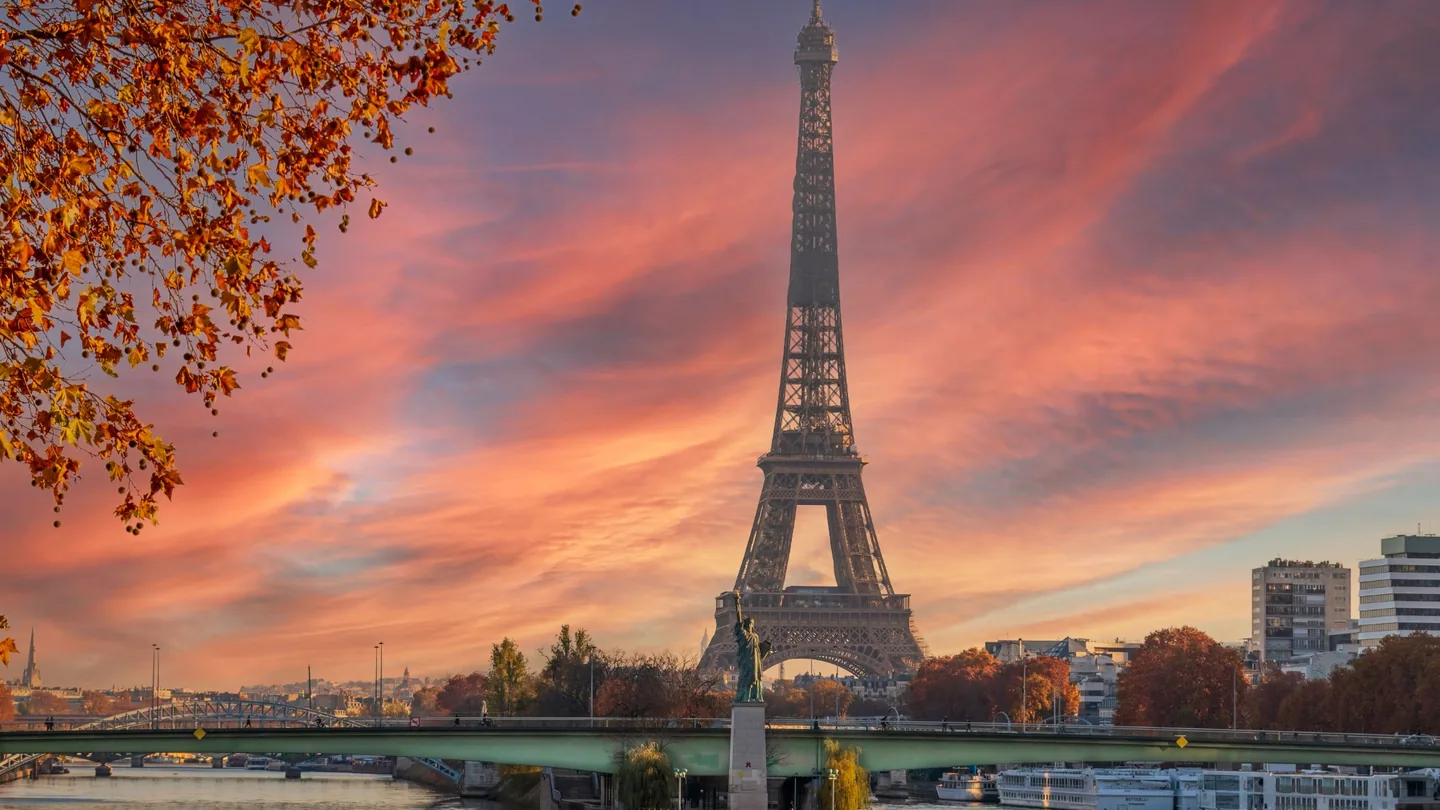
Warm directional light and a colorful sky can transform the Eiffel Tower and Seine corridor as Paris approaches sunset.
Photo: Rosivan Morais / PexelsWhat Photographers Should Know
Light in practice
Paris Photography Examples
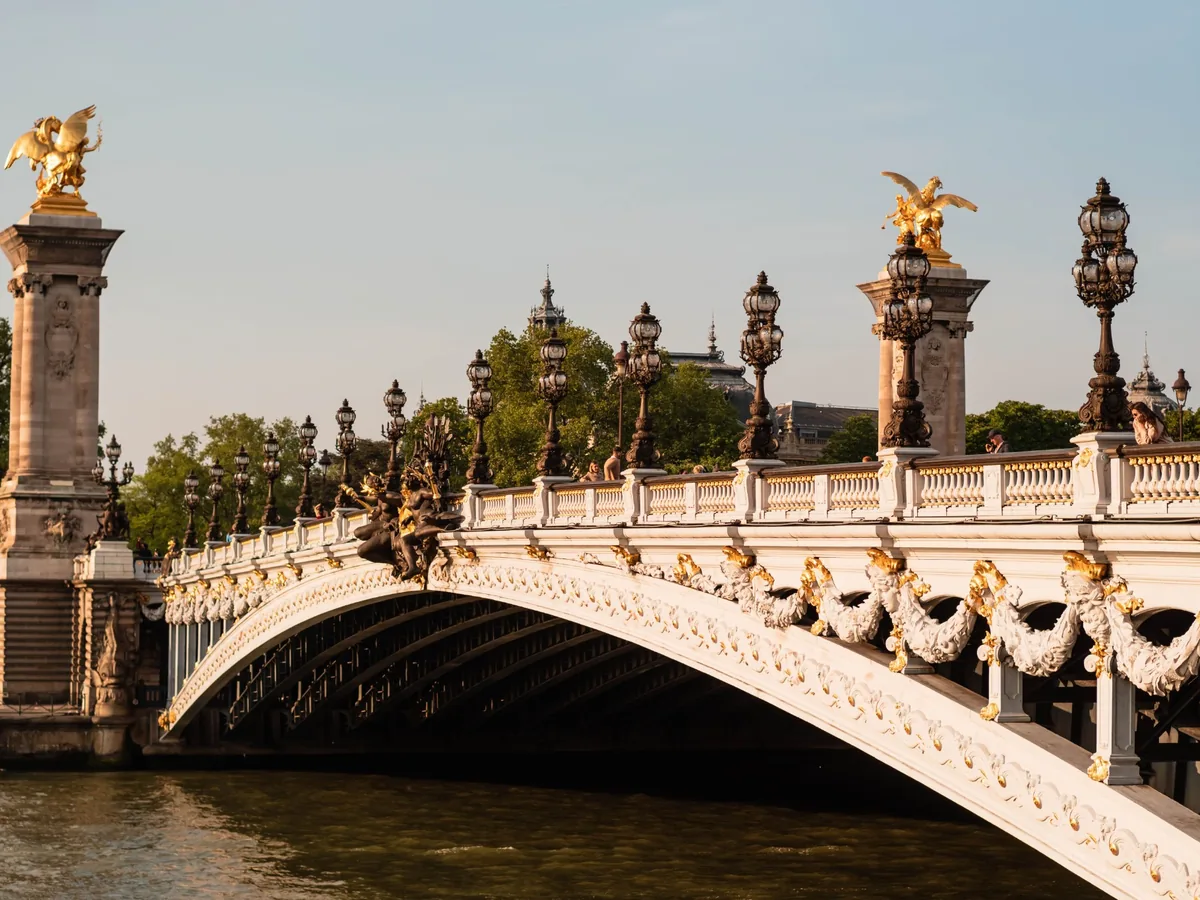
Low-angle sunlight can illuminate the bridge's gilded sculptures, stonework and lamps while creating strong architectural depth.
Photo: Alejandro Aznar / Pexels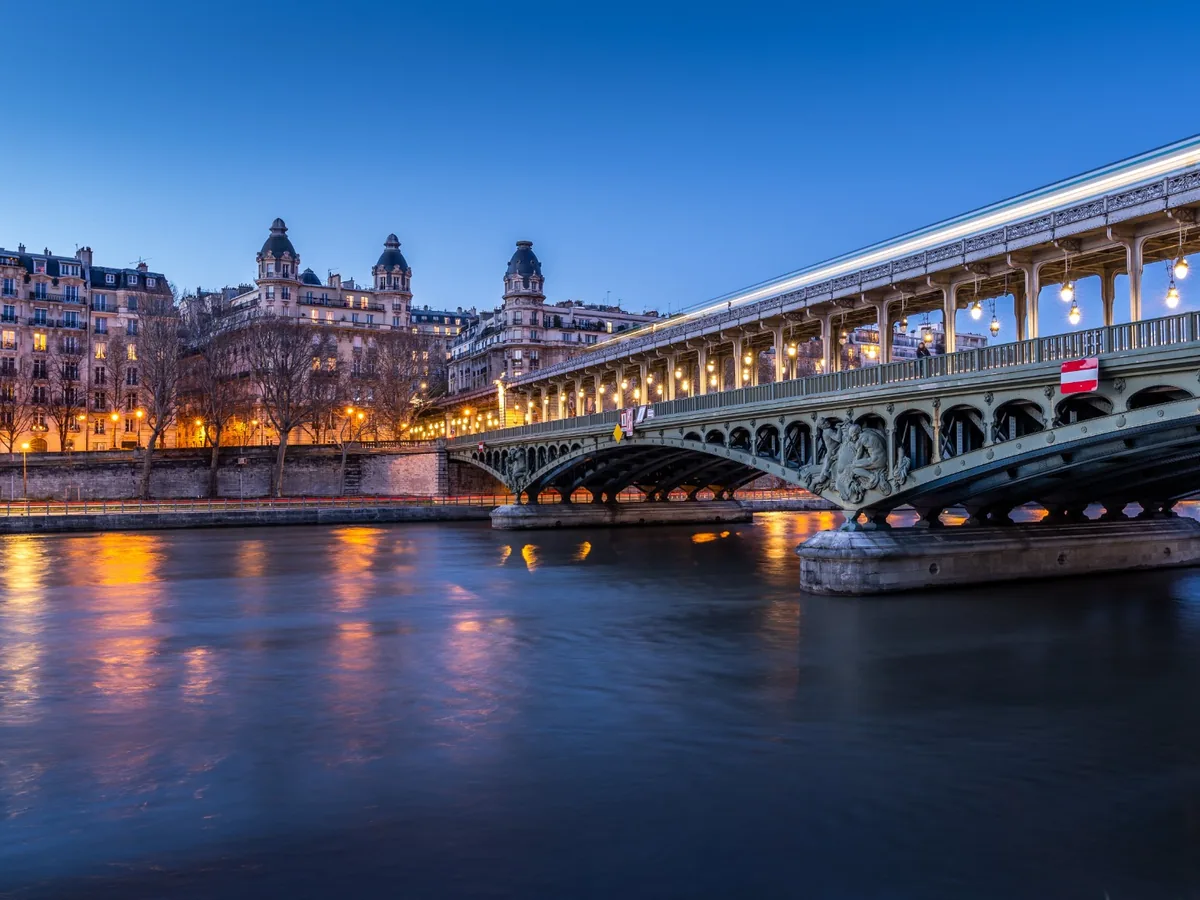
As daylight fades, warm bridge lighting begins balancing against the cobalt sky while the Seine stretches city lights into reflections.
Photo: Pierre Blaché / PexelsGolden Hour Photography Locations in Paris
Trocadéro / Eiffel Tower
Landmark + sun alignment- Best for
- Eiffel Tower, silhouettes, sunrise quiet and blue hour
- Planning note
- Temporary events/barriers can change access.
Pont Alexandre III
Seine + bridge architecture- Best for
- Bridge ornament, Eiffel Tower views, reflections and lamps
- Planning note
- Excellent multi-direction golden-to-blue-hour viewpoint.
Louvre / Tuileries
Architecture + formal axis- Best for
- Louvre Pyramid, façades, gardens and blue hour
- Planning note
- Hours vary seasonally; verify late access.
Montmartre / Sacré-Cœur
Elevated Paris panorama- Best for
- Rooftops, atmospheric layers, sunrise and twilight
- Planning note
- Crowds and haze strongly affect compositions.
Bir-Hakeim Bridge
Eiffel Tower + geometry- Best for
- Structural framing, Seine, portraits and blue hour
- Planning note
- Keep active pedestrian/transit routes clear.
Architectural planning
Paris Is a Sun-Direction City
Paris is full of boulevards, narrow streets, bridges, courtyards and monumental axes. A difference of even 10–20° in solar azimuth can determine whether a façade receives direct light or stays in shadow.
Use Sun Direction to plan Eiffel Tower silhouettes, bridge side light, warm façades, Tuileries shadows and Montmartre rooftop illumination.
Light transition
Golden Hour vs. Blue Hour in Paris
Golden hour favors limestone façades, Seine embankments, bridge details and Montmartre rooftops. Blue hour favors illuminated bridges, the Louvre exterior, Seine reflections and city streets. For many Paris compositions, sunset is not the end of the session.
Image rights
Can You Photograph the Eiffel Tower at Night?
Taking personal photographs of the illuminated Eiffel Tower is different from commercially publishing them. The tower itself is in the public domain, while its nighttime illumination and special lighting are protected works.
Personal/private use does not require authorization from the Eiffel Tower operator. Professional or commercial use of imagery showing protected nighttime lighting may require prior authorization and fees.
River light
Photographing the Seine at Golden & Blue Hour
Seine reflections depend on viewing angle, wind, boat traffic, river texture and artificial lighting. Moving water often creates elongated reflections rather than mirror symmetry, especially around Pont Alexandre III and illuminated riverfront architecture.
Seasonal access
Louvre & Tuileries Access Changes With the Season
Tuileries Garden hours vary substantially through the year and can change for events. A calculated sunset or blue-hour window does not guarantee access for the entire period.
Sunrise vs. Sunset in Paris
Sunrise
Often best for cleaner architectural compositions at Trocadéro, Louvre, Pont Alexandre III, Bir-Hakeim and Montmartre. Fewer pedestrians can matter as much as light direction.
Sunset & Blue Hour
Stronger city illumination and reflections make evening a classic choice, but crowds and closing times become more important.
Cloud interpretation
Cloud Layers & Paris Light
Low overcast can weaken conventional golden-hour color but support moody architecture. Broken low/mid cloud can allow warm light beneath darker layers. High cloud can catch post-sunset color. Clear skies provide reliable directional light.
Wet-city photography
Rain Can Improve Paris Blue Hour
Wet streets and stone surfaces can reflect cafés, street lamps, Métro signs, vehicle lights and monuments. Rain may reduce classic sunset potential while increasing blue-hour street-photography opportunities.
Seasonal Photography Planning
Organized shoots
Professional Photography & Filming
Casual handheld visitor photography differs from organized commercial production. Larger crews, significant equipment, reserved space or disruption can require authorization from the City of Paris or individual site operator.
Aircraft
Drone Photography
Do not assume central Paris is available for recreational drone photography. Verify current French/EU aviation restrictions and required authorization before flight; GoldenHourNow does not determine drone legality.
Paris Golden Hour Workflow
- Choose architecture, skyline, Seine or street photography.
- Select the exact viewpoint.
- Check sunrise/sunset azimuth.
- Determine which side of the subject should receive light.
- Review cloud layers.
- Check precipitation and wind.
- Verify site opening hours.
- For illuminated Eiffel Tower imagery, consider intended usage.
- Allow walking/transit time.
- Arrive before golden hour.
- Continue through blue hour.
- For organized/commercial shoots, verify authorization requirements.
Nearby Photography Destinations
Future France coverage can include Versailles, Mont-Saint-Michel, Étretat, the Loire Valley and additional Paris viewpoints.