 Golden Hour Now
Search a city or place name, or enter decimal coordinates as latitude, longitude.
Plan for
Select your location by searching for a city, place name, or coordinates above; click the Use my location button; or click anywhere on the map to choose a custom location. Once selected, simply scroll down below the map to view your golden and blue hour times and other light‑planning details.
At a glance
Grand Canyon South Rim Light
Today
Updated for the selected coordinates and local time. Move the pin for your exact shooting viewpoint.
Selected Location
Coordinates
—
Local Time
Current time: —
Daylight Planner
Plan your shoot around blue hour, golden hour, sunrise, sunset, and daylight.
Photography Weather
Forecast conditions around the selected evening golden-hour window.
Select a location and date to view the forecast.
7-Day Photography Forecast
Compare the next seven upcoming evening golden-hour opportunities at this location.
Select a location to compare the week ahead.
Forecast confidence generally improves as the shoot date approaches. Click any day to load its full daylight, sun-direction, weather, cloud, and quality details.
Grand Canyon South Rim photography guide
Photographing Golden Hour at Grand Canyon South Rim
Grand Canyon photography is about light moving through the canyon as much as the sun itself. Low-angle light illuminates some walls while leaving others in cool shadow, revealing depth, ridges and geological layers that change from viewpoint to viewpoint.
The default pin is near the Visitor Center / Mather Point area. Select the exact overlook before relying on sun direction, weather or visibility. Grand Canyon South Rim uses America/Phoenix time year-round.
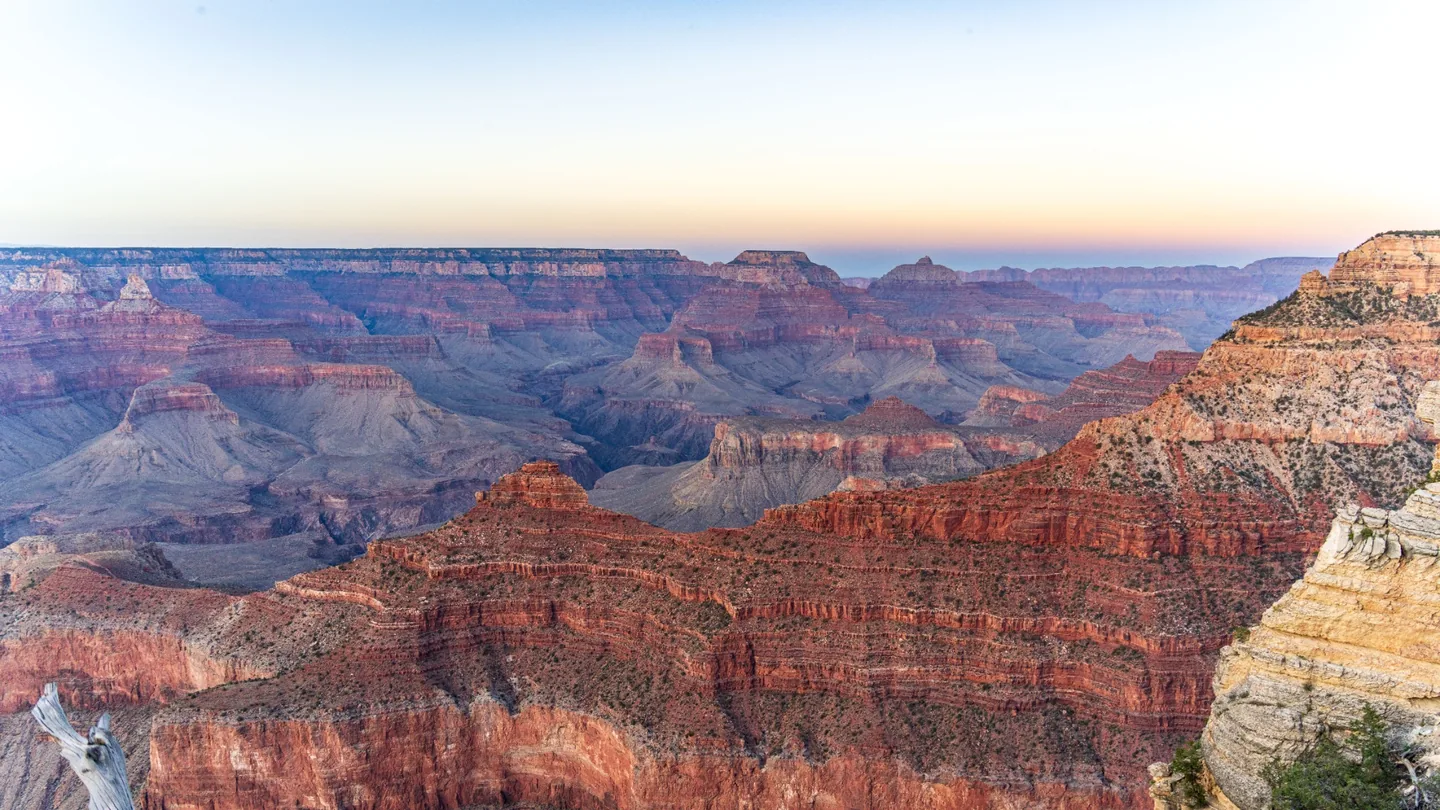
Low-angle light reaches successive canyon layers differently, creating changing combinations of illuminated rock and shadow.
Photo: Abhishek Navlakha / PexelsWhat Photographers Should Know
Light in practice
Grand Canyon Photography Examples
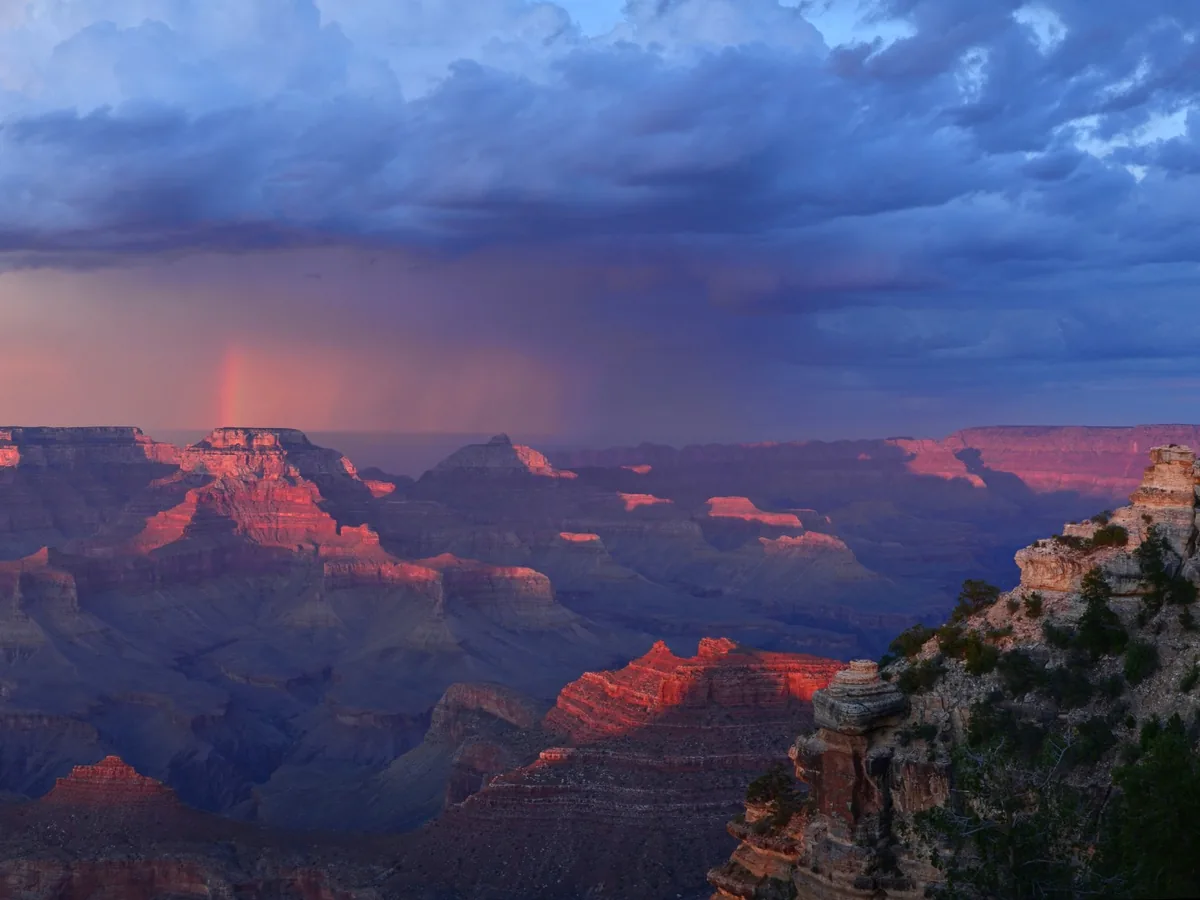
Breaks in storm clouds can produce localized illumination, deep shadow and rapidly changing color across the canyon.
Photo: Michael Quinn / National Park Service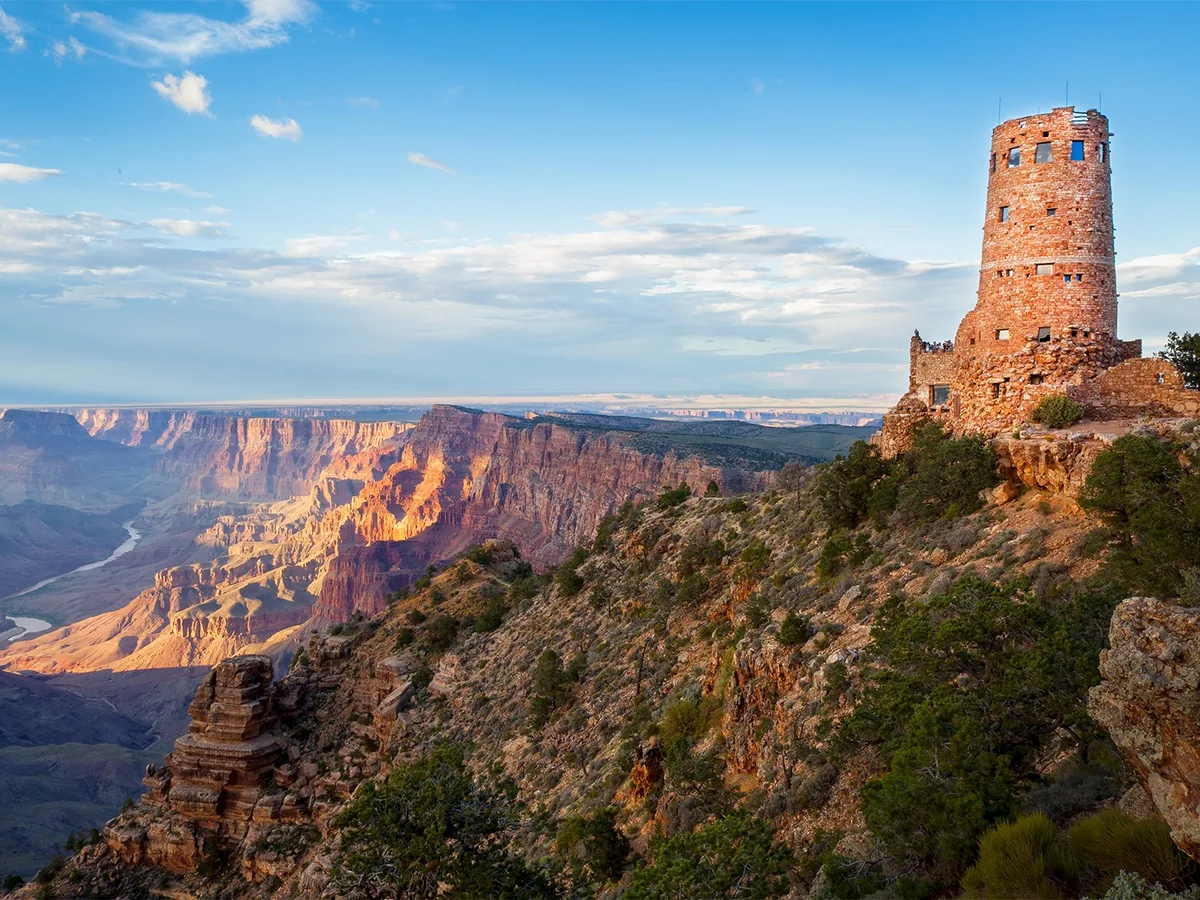
A strong foreground subject can anchor the composition while low-angle light reveals distant canyon layers.
Photo: John Kees / Wikimedia Commons · CC BY-SA 4.0 · Cropped/optimizedGolden Hour Photography Locations at Grand Canyon South Rim
Mather Point
Classic canyon panorama- Best for
- Expansive South Rim panorama
- Light
- Dawn / sunrise; general golden hour
- Orientation
- Broad canyon views east and west
- Access
- Short paved walk from Visitor Center parking
- Seasonal
- South Rim open year-round; weather can affect access
- Notes
- Very popular at sunrise and peak periods
A classic first-time viewpoint where early light creates alternating illuminated formations and shadow.
Plan this locationYaki Point
Sunrise specialist- Best for
- Dawn silhouettes, O'Neill Butte and South Kaibab Trail
- Light
- Dawn / sunrise
- Orientation
- Multiple shooting directions from one overlook
- Access
- Normally shuttle, bicycle or foot access
- Seasonal
- Shuttle operations can change seasonally
- Notes
- No normal private-vehicle access
A strong sunrise viewpoint where different shooting directions create silhouettes or directly illuminated canyon features.
Plan this locationHopi Point
Classic sunset- Best for
- Wide western canyon views and illuminated temples
- Light
- Late afternoon / sunset
- Orientation
- West-facing Hermit Road overlook
- Access
- Hermit Road; shuttle rules apply during busy periods
- Seasonal
- Transportation rules vary seasonally
- Notes
- Popular and often crowded near sunset
A classic sunset viewpoint where low-angle light reveals canyon layers and relief.
Plan this locationMohave Point
River + western canyon- Best for
- Colorado River, Hermit Rapid and western canyon
- Light
- Late afternoon / sunset
- Orientation
- West-facing Hermit Road overlook
- Access
- Hermit Road; shuttle rules may apply
- Seasonal
- Transportation rules vary seasonally
- Notes
- Can be less congested than Hopi Point
A strong alternative when you want river visibility and broad western canyon depth.
Plan this locationDesert View / Watchtower
Eastern canyon landmark- Best for
- Watchtower, Colorado River and Painted Desert
- Light
- Sunset; also sunrise potential
- Orientation
- Eastern South Rim panorama
- Access
- Private vehicle via Desert View Drive
- Seasonal
- Normally year-round; winter weather can affect road access
- Notes
- About 23 miles east of Grand Canyon Village
The Watchtower and eastern canyon create a distinct composition with layered silhouettes and river views.
Plan this locationSignature light
Photographing Light & Shadow Inside the Canyon
The strongest photograph is often not the solar disk. Low-angle sunlight can rake across ridges, illuminate isolated temples and leave adjacent formations in deep shadow. Use Sun Direction to understand where the sun sits relative to the viewpoint, then evaluate which canyon walls face that light.
Broken clouds can make the effect more dynamic with moving shadows and localized beams. A perfectly clear sky is not automatically the highest creative opportunity; the Quality Score remains a planning heuristic.
Sunrise vs. Sunset at the South Rim
Sunrise
Yaki Point and Mather Point are strong dawn choices. Arrive before sunrise to work through blue hour, silhouettes and the first direct light entering the canyon.
Sunset
Hopi Point, Mohave Point and Desert View are strong evening options. Stay after direct light leaves the canyon for layered silhouettes and evening blue hour.
Choosing a Grand Canyon Viewpoint
- Classic first-time panorama: Mather Point.
- Dedicated sunrise: Yaki Point.
- Classic sunset: Hopi Point.
- Sunset + Colorado River: Mohave Point.
- Watchtower + eastern canyon: Desert View.
Seasonal Photography Planning
Storm-season planning
Clouds, Weather & Monsoon Photography
Summer storms can produce dramatic skies, but photography never justifies remaining exposed during lightning. If thunder is present or storms approach, follow park safety guidance and move to appropriate shelter.
Partial cloud cover can improve photographs through texture and moving shadows. Compare cloud cover, precipitation and wind for the exact viewpoint.
Long-distance clarity
Air Quality, Smoke & Visibility
Grand Canyon compositions depend on enormous viewing distances. Wildfire smoke, haze and regional air pollution can flatten distant layers even when immediate weather appears clear.
Before you travel
Photography, Shuttle Access & Safety
Mather Point is near Visitor Center parking; Yaki Point normally requires shuttle, walking or bicycling; Hopi and Mohave Points sit on Hermit Road where transportation rules vary seasonally; Desert View is normally reached by private vehicle, weather permitting.
Photography rules: Organized filming/photography or production needs can have separate requirements. Verify current NPS rules.
Drones: Drone use is prohibited within Grand Canyon National Park.
Rim safety: Stop walking before looking through a camera or viewfinder. Never back toward the edge while composing, stay behind barriers where provided, and leave exposed rim areas when lightning threatens.
Grand Canyon South Rim Golden Hour Workflow
- Choose the shoot date.
- Select the exact viewpoint.
- Determine whether shuttle access is required.
- Check sunrise/sunset and golden/blue-hour timing.
- Inspect sun direction relative to canyon walls.
- Review clouds, precipitation and visibility.
- Check air quality or smoke.
- Review wind and temperature.
- Compare the 7-day forecast.
- Arrive before the desired light window.
- Stop walking before using your camera near the rim.
Nearby Photography Destinations
Future pages can expand to Grand Canyon North Rim, Horseshoe Bend, Page / Lake Powell, Monument Valley, Sedona and Antelope Canyon. Until then, use the worldwide map or search.