 Golden Hour Now
Search a city or place name, or enter decimal coordinates as latitude, longitude.
Plan for
Select your location by searching for a city, place name, or coordinates above; click the Use my location button; or click anywhere on the map to choose a custom location. Once selected, simply scroll down below the map to view your golden and blue hour times and other light‑planning details.
At a glance
Joshua Tree National Park Light
Today
Updated for the selected coordinates and local time. Move the pin for your exact shooting viewpoint.
Selected Location
Coordinates
—
Local Time
Current time: —
Daylight Planner
Plan your shoot around blue hour, golden hour, sunrise, sunset, and daylight.
Photography Weather
Forecast conditions around the selected evening golden-hour window.
Select a location and date to view the forecast.
7-Day Photography Forecast
Compare the next seven upcoming evening golden-hour opportunities at this location.
Select a location to compare the week ahead.
Forecast confidence generally improves as the shoot date approaches. Click any day to load its full daylight, sun-direction, weather, cloud, and quality details.
Joshua Tree photography guide
Photographing Golden Hour in Joshua Tree National Park
Joshua Tree combines broad desert skies, sculpted granite, Joshua trees and cactus landscapes with a natural transition from golden hour into dark-sky photography. Open horizons make sunrise and sunset azimuth easy to visualize, while the park's large elevation range makes exact-location weather important.
The default pin sits along the central Park Boulevard corridor. Move it to the actual viewpoint before relying on temperature, wind, visibility or Quality Score.
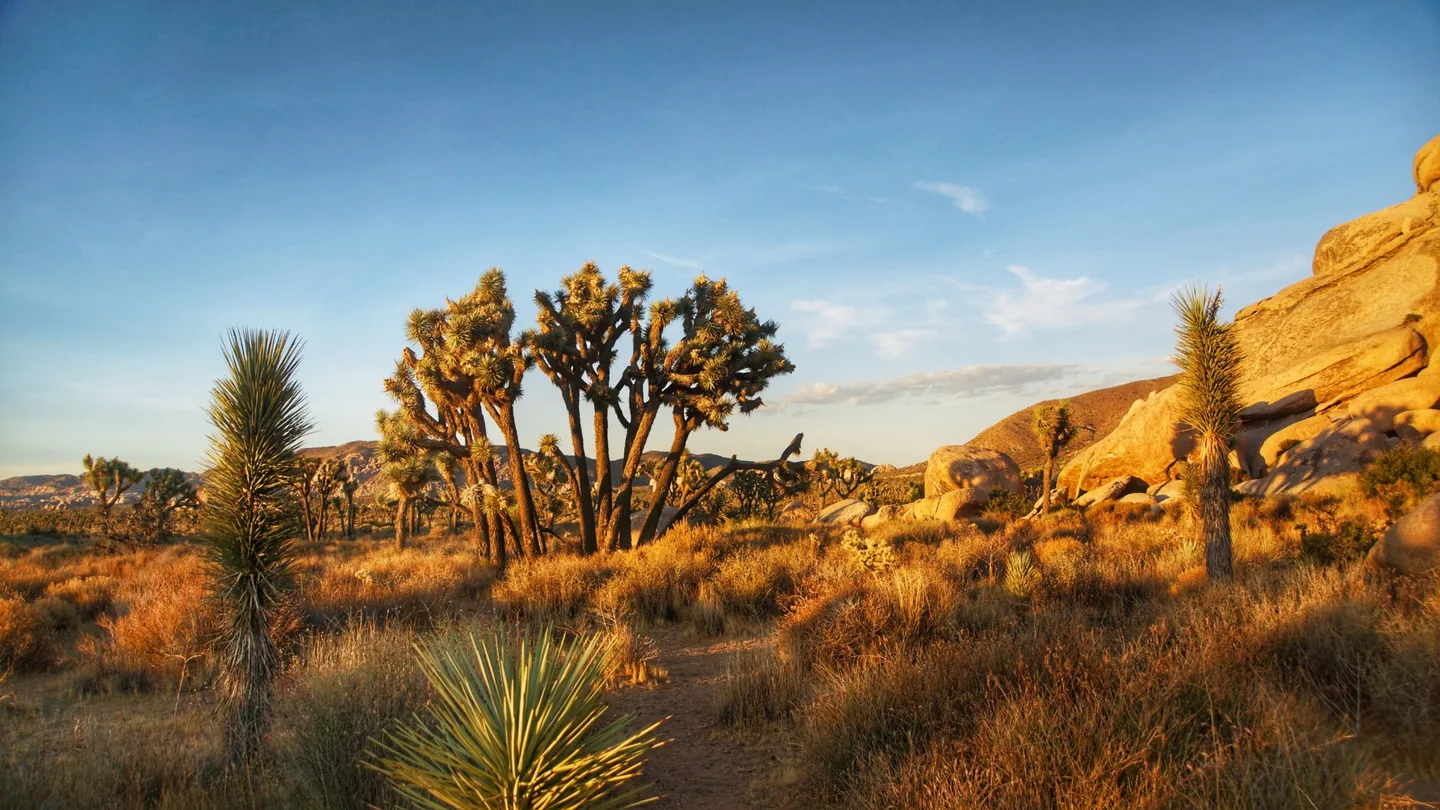
Low-angle evening light creates long shadows and warm side light across Joshua trees, boulders and open desert before sunset.
Photo: Dominique BOULAY / PexelsWhat Photographers Should Know
Light in practice
Joshua Tree Photography Examples
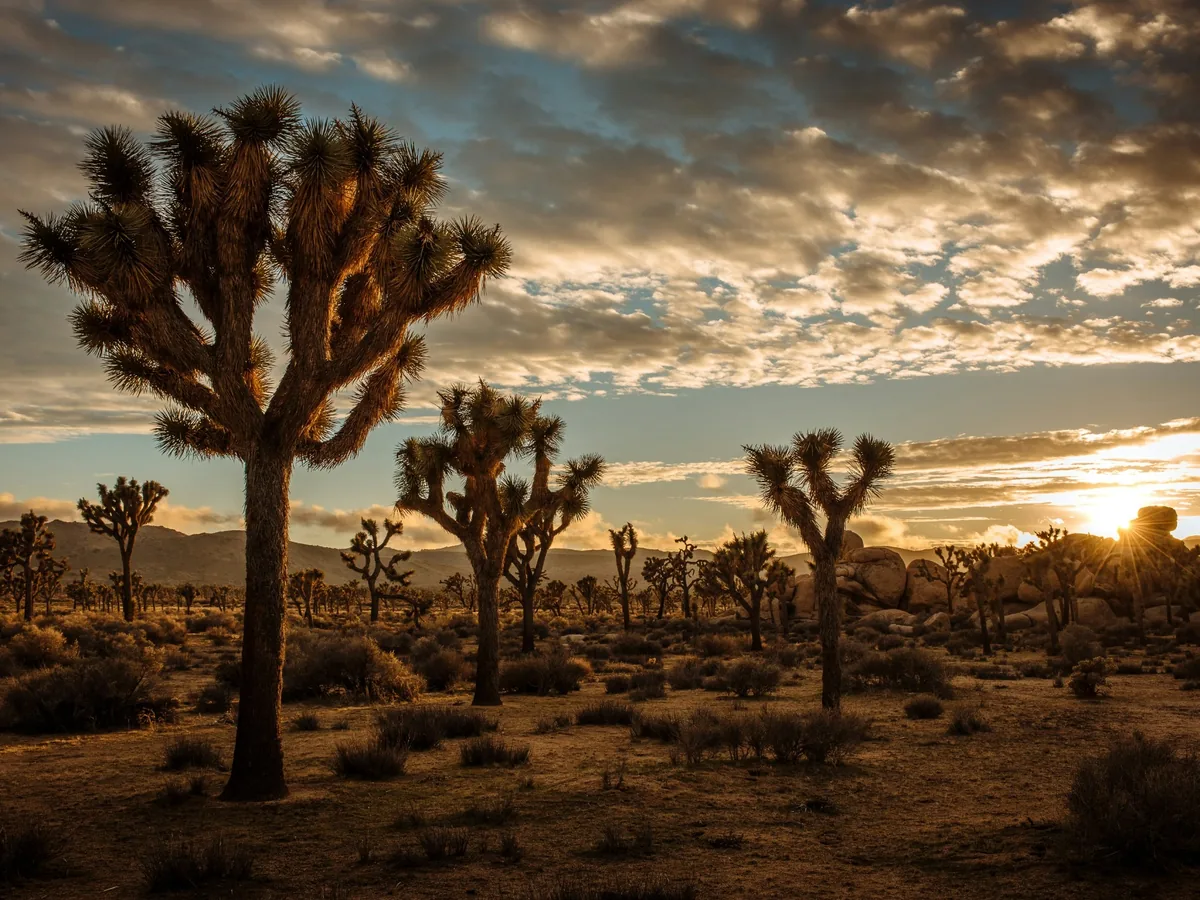
Low sun and broken clouds can create strong backlighting, long shadows and rapidly changing contrast across the desert.
Photo: Cedric Letsch / Unsplash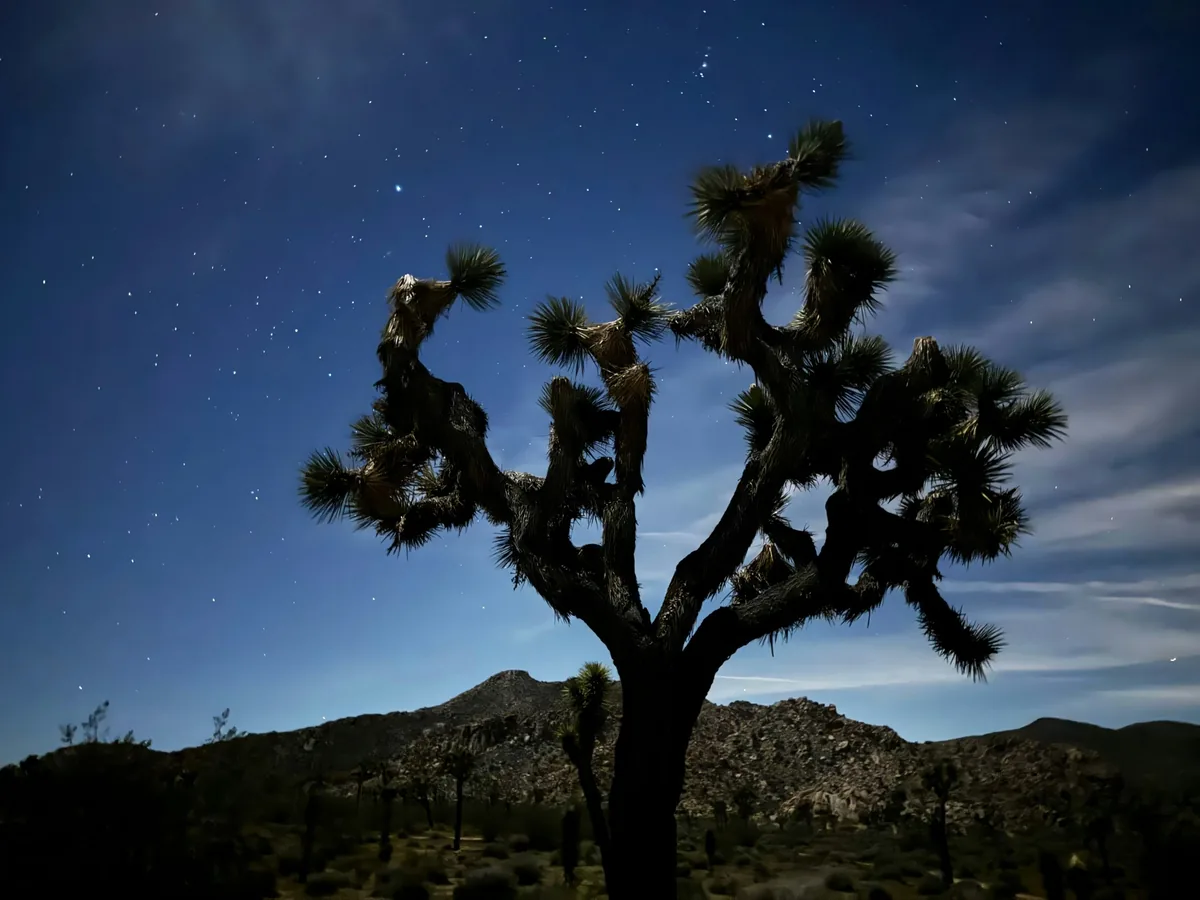
As the remaining solar illumination fades, stars become increasingly visible and the desert transitions from blue hour toward nighttime conditions.
Photo: Bill Johnston / UnsplashGolden Hour Photography Locations in Joshua Tree
Keys View
Panoramic desert sunset- Best for
- Coachella Valley, mountains, Salton Sea and San Andreas Fault
- Light
- Sunset / late golden hour
- Orientation
- Broad south/southwest panorama
- Access
- Paved overlook via Keys View Road
- Seasonal
- Generally accessible when park roads are open
- Notes
- Popular at sunset; parking can become difficult
A high-elevation panorama where haze and visibility strongly affect landscape depth.
Plan this locationCholla Cactus Garden
Glowing cactus sunrise- Best for
- Backlit cholla spines and open Colorado Desert
- Light
- Sunrise / early golden hour
- Orientation
- Open lower-elevation desert
- Access
- Short established loop trail
- Seasonal
- Summer heat can be severe
- Notes
- Do not touch cholla; give vegetation space
Backlighting can make cactus spines glow, making this the strongest featured sunrise viewpoint.
Plan this locationCap Rock
Joshua tree silhouettes- Best for
- Joshua trees, granite formations and colorful sky
- Light
- Sunset / evening golden hour
- Orientation
- Open desert tree-and-rock compositions
- Access
- Short nature-trail / roadside area
- Seasonal
- Generally accessible with normal park-road access
- Notes
- Keep equipment off Joshua trees and vegetation
Use Sun Direction to place the setting sun behind or beside an individual tree or rock formation.
Plan this locationArch Rock / White Tank
Golden-to-night transition- Best for
- Natural arch, granite boulders, blue hour and stars
- Light
- Late golden hour → sunset → blue hour → night
- Orientation
- Open desert sky around granite formations
- Access
- Arch Rock Nature Trail / White Tank area
- Seasonal
- White Tank campground operations can change in summer
- Notes
- Night planning requires separate moon/Milky Way information
A signature transition location where warm rock light flows through blue hour into dark-sky photography.
Plan this locationSkull Rock / Jumbo Rocks
Boulders + night transition- Best for
- Sculpted granite, Joshua trees, silhouettes and stars
- Light
- Golden hour → blue hour → night
- Orientation
- Open boulder landscape along Park Boulevard
- Access
- Roadside / Jumbo Rocks area access
- Seasonal
- Verify current campground/road conditions
- Notes
- Use care around rocks after dark and carry offline navigation
A rock-form landscape that remains useful after sunset and showcases the full evening light sequence.
Plan this locationSignature sequence
From Golden Hour to the Night Sky
Joshua Tree is open around the clock and known for dark skies, so sunset does not have to end the shoot. Evening golden hour can illuminate granite and vegetation, sunset creates silhouettes, blue hour preserves sky color, and darkness opens star photography.
GoldenHourNow plans solar light and weather. It does not currently calculate moon phase, moonrise/moonset or Milky Way orientation, so verify those separately for astrophotography.
Sun-direction technique
Planning Joshua Tree Silhouettes
Select the exact tree, cactus or boulder area, choose the date and inspect sunrise or sunset azimuth. Position the subject between the camera and solar direction for a silhouette, or offset the sun for rim light. Small date changes can visibly shift the sun relative to a specific formation.
Sunrise vs. Sunset in Joshua Tree
Sunrise
Cholla Cactus Garden is the strongest featured sunrise option, with Keys View and Jumbo Rocks also useful. Morning brings lower temperatures, long shadows and often fewer visitors.
Sunset
Keys View, Cap Rock, Arch Rock and Skull Rock are strong evening choices. For night work, treat sunset as the beginning of a longer sequence.
Choosing a Joshua Tree Viewpoint
- Panoramic sunset: Keys View.
- Glowing cactus sunrise: Cholla Cactus Garden.
- Joshua tree silhouettes: Cap Rock.
- Arch + golden-to-night transition: Arch Rock / White Tank.
- Boulders + blue hour / night: Skull Rock / Jumbo Rocks.
Seasonal Photography Planning
Desert weather
Heat, Desert Storms & Flash Floods
Summer heat is a serious hazard. Plan strenuous photography walks for cooler periods and carry appropriate water. Monsoon storms can produce dramatic clouds and lightning, but washes and low areas can flood rapidly. Never enter a wash when flooding is possible or cross moving water.
Exact-location planning
Weather, Elevation & Visibility
Do not treat Joshua Tree as one weather point. Keys View can be cooler and windier while lower desert locations can be substantially hotter. Select the exact viewpoint before interpreting Photography Weather or the 7-day forecast.
Night planning limits
Night-Sky Photography Limitations
GoldenHourNow can help you reach the end of blue hour with weather context, but night photography also depends on moonlight, Milky Way position and astronomical darkness. Verify those separately.
Before you travel
Photography, Access & Desert Protection
Joshua Tree is open 24 hours a day, making sunrise, blue-hour and night photography practical. Cell service is limited, so download maps and save viewpoint information before entering.
Photography: Larger, organized or higher-impact productions should verify current NPS requirements.
Vegetation: Joshua trees, cacti and desert soils are not props. Do not attach equipment to vegetation or remove natural objects.
Drones: Drone use is prohibited in Joshua Tree National Park.
Fire restrictions: Seasonal restrictions can apply during hot, dry periods; check current alerts.
Joshua Tree Golden Hour Workflow
- Choose the shoot date.
- Select the exact viewpoint.
- Check sunrise or sunset azimuth.
- Choose front light, backlight or silhouette.
- Review temperature and wind.
- Check cloud cover and visibility.
- Avoid strenuous midday activity in hot weather.
- Check flash-flood risk when storms are possible.
- Compare the 7-day forecast.
- Stay through blue hour if continuing into night photography.
- Separately check moon and Milky Way information.
- Download maps before entering.
Nearby Photography Destinations
Future pages can expand to Anza-Borrego, Palm Springs, Salton Sea, Mojave National Preserve, Death Valley and the San Bernardino Mountains. Until then, use the worldwide map or search.