 Golden Hour Now
Search a city or place name, or enter decimal coordinates as latitude, longitude.
Plan for
Select your location by searching for a city, place name, or coordinates above; click the Use my location button; or click anywhere on the map to choose a custom location. Once selected, simply scroll down below the map to view your golden and blue hour times and other light‑planning details.
At a glance
New York City Light
Today
Updated for the selected coordinates and local time. Move the pin for your exact shooting viewpoint.
Selected Location
Coordinates
—
Local Time
Current time: —
Daylight Planner
Plan your shoot around blue hour, golden hour, sunrise, sunset, and daylight.
Photography Weather
Forecast conditions around the selected evening golden-hour window.
Select a location and date to view the forecast.
7-Day Photography Forecast
Compare the next seven upcoming evening golden-hour opportunities at this location.
Select a location to compare the week ahead.
Forecast confidence generally improves as the shoot date approaches. Click any day to load its full daylight, sun-direction, weather, cloud, and quality details.
New York City photography guide
Photographing Golden Hour in New York City
New York rewards exact light planning because waterfront orientation, skyscraper shadows and Manhattan's street grid can change a composition within a few blocks. Move the pin or choose a featured viewpoint below for the actual place you intend to shoot.
Golden hour is only part of the story. City lights, bridge lighting and reflections often make evening blue hour just as valuable, while tall buildings can block direct sunlight well before astronomical sunset at street level.
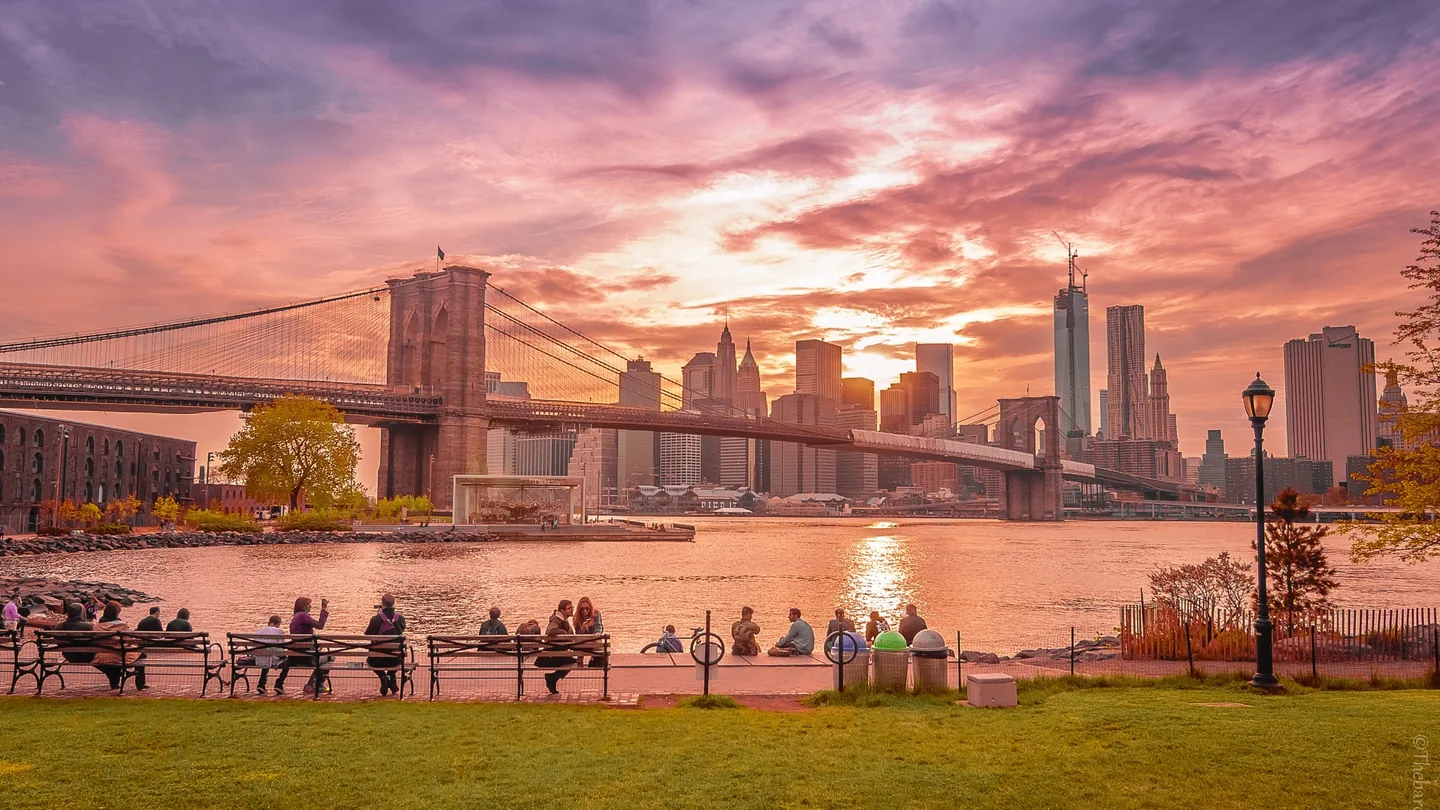
Warm evening light and reflections shape the skyline before Manhattan transitions into blue hour.
Photo: J Javier Hernández / Wikimedia Commons · CC BY 3.0 · Cropped/optimizedWhat Photographers Should Know
Light in practice
New York City Photography Examples
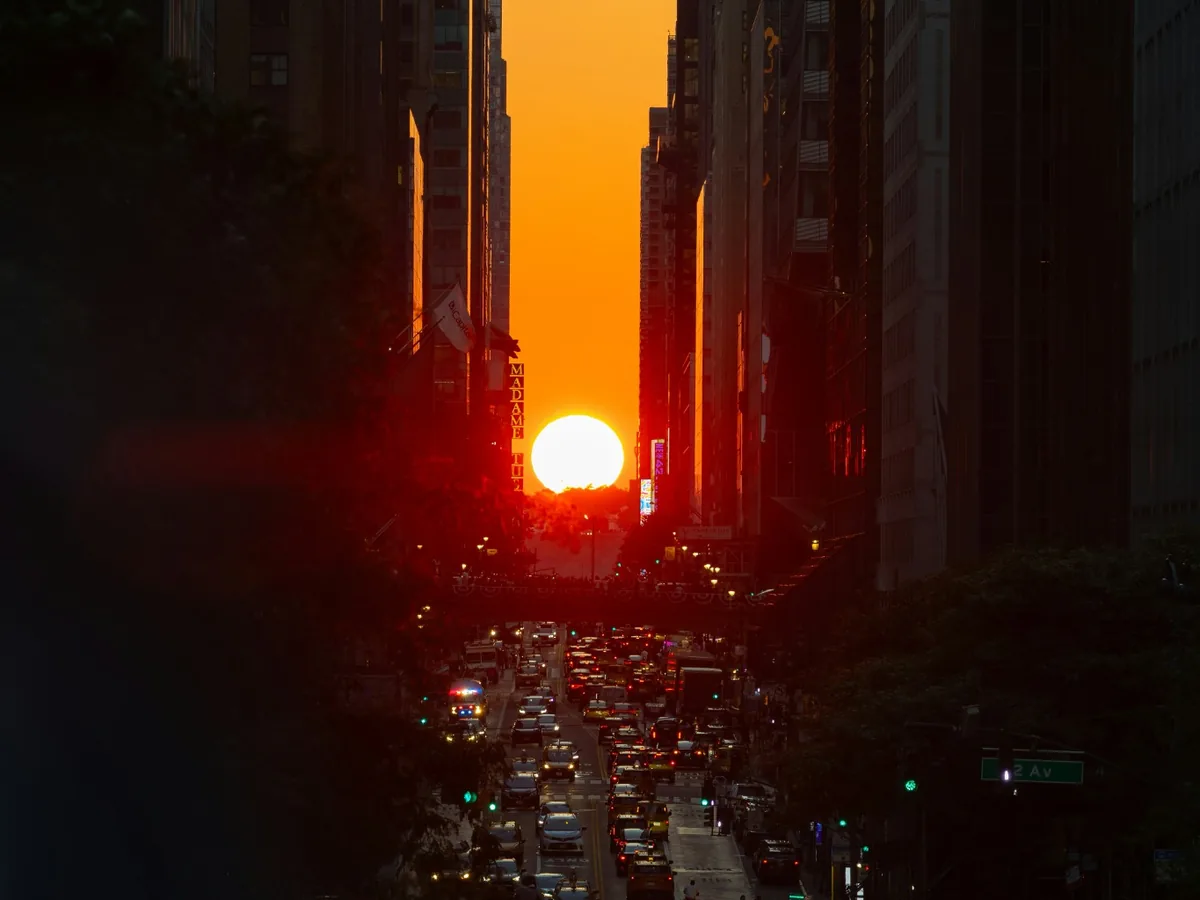
Near Manhattanhenge dates, the setting sun approaches alignment with Manhattan's east-west street canyons.
Photo: Sergei Lushchik / Unsplash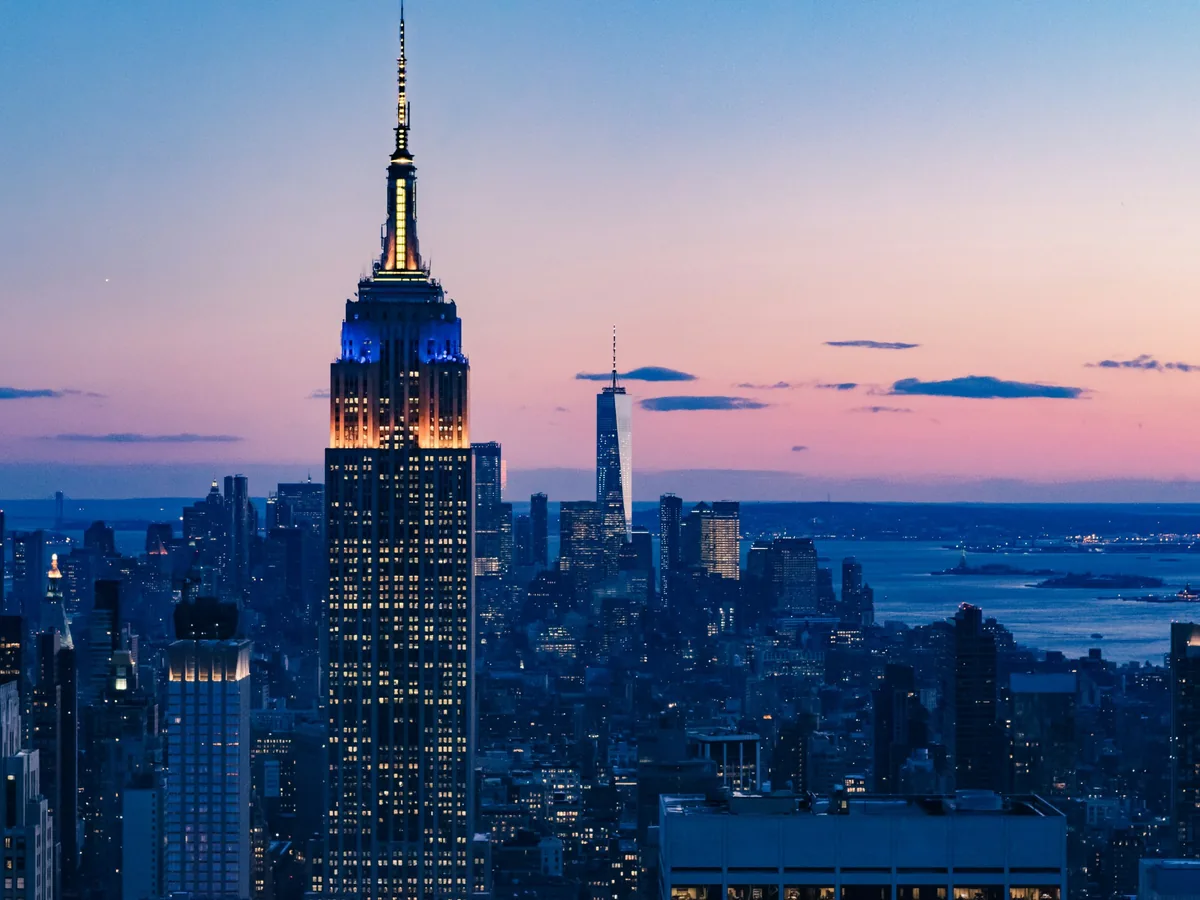
Illuminated buildings begin balancing against the remaining ambient sky after sunset.
Photo: Neil Cooper / UnsplashGolden Hour Photography Locations in New York City
Brooklyn Bridge Park
Waterfront skyline- Best for
- Lower Manhattan, Brooklyn Bridge and reflections
- Light
- Evening golden hour → blue hour
- Access
- Public waterfront park
- Notes
- Commercial photography may require a park permit.
West-facing skyline views make sunset direction and the golden-to-blue-hour transition especially useful here.
Plan this locationDUMBO / Washington Street
Bridge framing- Best for
- Manhattan Bridge, brick streets and urban geometry
- Light
- Morning golden hour / evening blue hour
- Access
- Public street; expect crowds
- Notes
- Keep pedestrian and vehicle access clear.
Directional light changes this bridge-and-street composition dramatically.
Plan this locationGantry Plaza State Park
Midtown skyline- Best for
- Empire State Building, UN skyline, piers and reflections
- Light
- Evening golden hour and sunset
- Access
- New York State park
- Notes
- Check current rules for organized or commercial photography.
Its east-of-Manhattan position looking west makes sunset azimuth especially useful.
Plan this locationTop of the Rock
Elevated skyline- Best for
- Empire State Building, Central Park and Manhattan skyline
- Light
- Late golden hour → sunset → blue hour
- Access
- Ticket required; hours apply
- Notes
- Verify current equipment policies.
The elevated viewpoint reveals changing sky and city light, but access is controlled.
Plan this locationTudor City Overpass / 42nd Street
Manhattanhenge geometry- Best for
- East-west street alignment and setting sun
- Light
- Late-May / mid-July sunset alignment
- Access
- Public urban viewpoint; very crowded at events
- Notes
- Arrive early and keep pedestrian circulation clear.
A strong azimuth-planning example: near Manhattanhenge dates the setting sun aligns with the street grid.
Plan this locationSun alignment
Photographing Manhattanhenge
Manhattan's street grid is rotated away from true east-west. Around late May and mid-July, the setting sun can align closely with major cross streets. Exact full-sun and half-sun dates vary by year, so this page avoids hard-coding an old annual schedule.
Use the Sun Direction map and compare sunset azimuth with the street corridor. Common viewing streets include 14th, 23rd, 34th, 42nd and 57th Streets. Tudor City / 42nd Street is included above as a starting point.
For annually announced dates, consult the Hayden Planetarium at the American Museum of Natural History.
Where Does the Sun Set in New York City?
The sunset bearing changes through the year. Waterfront photographers can use that shift to determine whether the sun falls behind Manhattan, beside a bridge or outside the planned frame. Buildings can make direct sunlight disappear earlier than astronomical sunset.
Golden Hour vs. Blue Hour in NYC
Golden hour emphasizes warm directional light, long shadows and illuminated building faces. Blue hour becomes especially important after sunset as the sky retains color while windows, bridges and street lighting become prominent.
Seasonal Photography Planning
Photography & Access Notes
Casual handheld photography on ordinary city public property generally does not face the same permit requirements as productions claiming exclusive use or using larger production equipment, but individual properties can have separate rules. Check current requirements for the exact location and equipment.
Drone photography: New York City has strict drone takeoff and landing rules. Verify current city, FAA and property requirements before planning a drone shoot.
Choosing a NYC Viewpoint
- Sunset behind Manhattan: Start with Brooklyn or Queens waterfront viewpoints looking west.
- Warm architecture: Use Sun Direction to position the sun relative to the building face or street.
- Sunrise: Consider east-facing waterfronts, bridges and elevated viewpoints.
- Blue-hour skyline: Prioritize reflections, bridges and illuminated architecture.
New York City Golden Hour Workflow
- Choose the shoot date.
- Set the exact viewpoint.
- Check sunrise/sunset azimuth.
- Account for skyscraper and horizon obstructions.
- Review cloud cover, precipitation, visibility and Quality Score.
- Compare the 7-day forecast.
- For cityscapes, consider staying through blue hour.
Nearby Photography Destinations
Future pages can expand to Jersey City, Hoboken, Coney Island, Rockaway Beach, Long Island City and Bear Mountain. Until then, use the worldwide map or search for exact planning.